The Short Answer: 15–20% of Each Deal
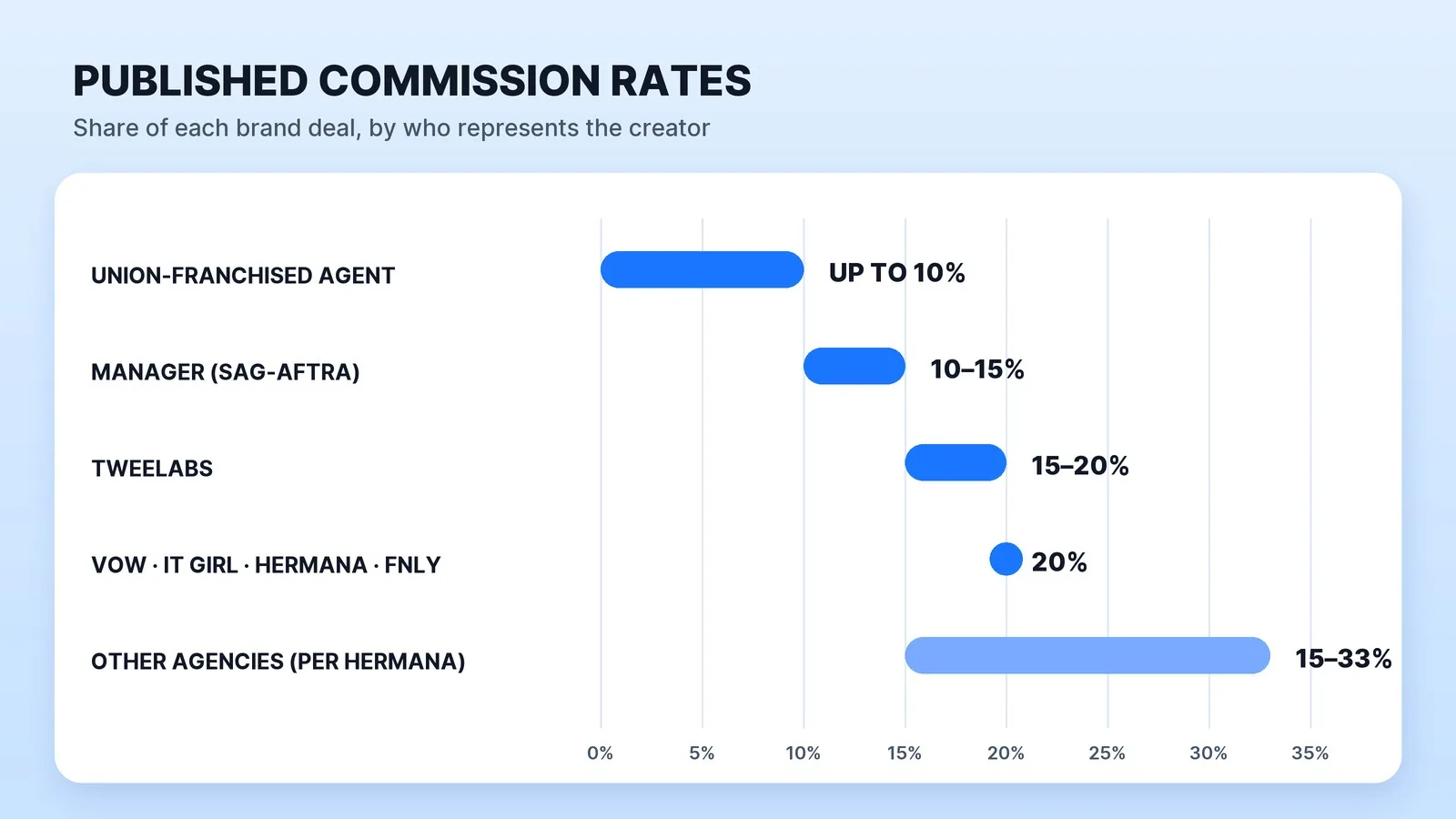
Influencer managers usually take 15–20% of every brand deal they book or manage, and 20% is the rate most agencies that publish their terms list. VOW Talent, It Girl Agency, Hermana and FNLY all list 20%; TweeLabs lists 15–20%. For actors, SAG-AFTRA says a manager generally charges 10–15% and a union-franchised agent generally 10%.
Those are other companies' published terms, read November 3, 2026, not ours. Mark Studios quotes deal work per engagement, so there is no Mark Studios price on this page.
Published Commission Rates, Side by Side
| Who represents you | Published cut | What else the page says |
|---|---|---|
| Union-franchised talent agent (actors) | Generally 10% | Licensed by the state and franchised by the union (SAG-AFTRA) |
| Manager (actors) | Generally 10–15% | Not franchised by the union and "rarely regulated by state law" (SAG-AFTRA) |
| VOW Talent | 20% of every deal it closes | A brand paying 2,500 EUR leaves the creator 2,000 EUR |
| It Girl Agency | 20% of all brand deals | No monthly fee; a 3-month trial, then 6–12 month contracts |
| TweeLabs | 15–20% of secured deals | No upfront fee; exclusive representation; AdSense stays yours |
| FNLY | 20% of the net fee | Only on deals it brokers; your own deals stay commission-free |
| 22impact | 20% | Says it charges the client 20% on top of your fee |
| Hermana | 20% management fee | Says other agencies charge 15–33% |
The same questions apply whatever you make, including for podcasters selling host-read ads: what the percentage is taken from, which deals it covers and how long the contract runs.
What You Keep From a $10,000 Deal
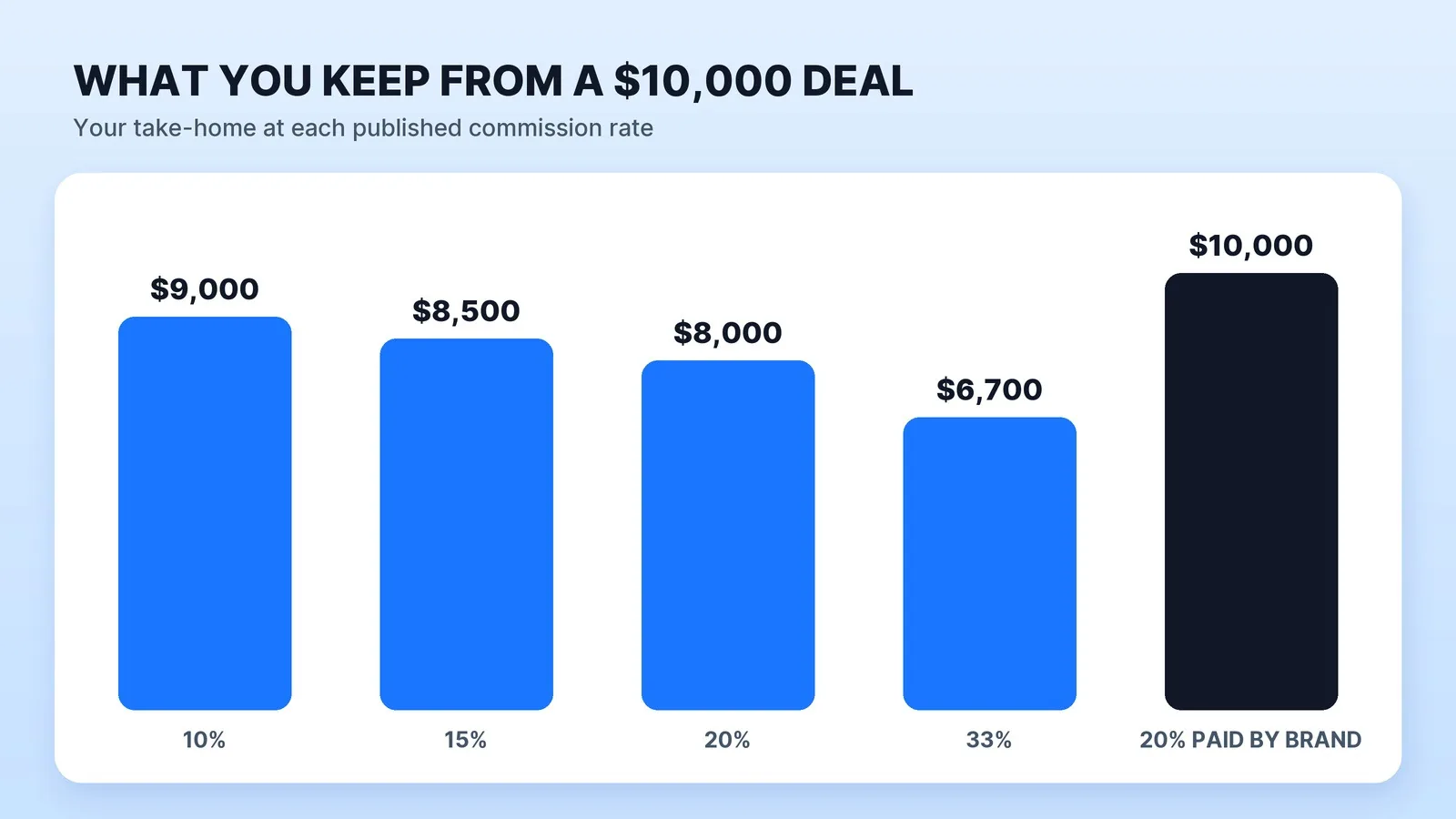
The rate matters less than what it's taken from. Three things change your take-home more than five percentage points do:
- Gross or net. FNLY calculates its 20% on the net fee, excluding VAT. A cut of the gross includes tax you were going to pay anyway.
- Which deals. FNLY and TweeLabs charge only on deals they bring in or negotiate. A contract that takes a cut of every deal, including brands that emailed you directly, costs far more than one with a higher rate on fewer deals.
- Who pays. 22impact says it charges the brand 20% on top of your fee, so its commission doesn't come out of your rate. Ask any manager whether their cut is added to the quote or taken from it.
The manager is also paid after the brand pays. 22impact notes brands can take up to 90 days to settle and pays creators within 14 days of the money arriving, so ask how long your money sits with the agency.
What the Commission Should Cover
A manager's cut normally pays for:
- Pitching. Finding brands and sending your media kit. See what goes in a creator media kit.
- Negotiation. Rate, usage rights, exclusivity and payment terms. Our guide to brand deal pricing and negotiation shows the rate side.
- Campaign management. Briefs, deadlines, revision rounds and approvals.
- Getting paid. Invoicing and chasing late payers.
Ask whether there's a retainer or onboarding fee on top; It Girl lists no monthly fee, and TweeLabs and 22impact say they charge nothing up front. A Multi-Channel Network is a different arrangement again. YouTube says an MCN routes your revenue through its own AdSense account and "typically" takes a percentage of your share, and that you don't need to join one to succeed on YouTube.
Cheaper Routes Than a Full-Time Manager
You don't need exclusive representation to get help with deals:
| Route | Published price | Best for |
|---|---|---|
| Hourly freelancer | $40–$90 an hour median on Upwork | Reviewing one contract or a rate card |
| Per-gig outreach | 1,400+ "brand deal manager" gigs on Fiverr; page-one starting prices $5–$4,000, median $30 | Sending pitches, not negotiating |
| Per-engagement advisor | Flat fee, percentage or hybrid, agreed up front | A big deal or a first campaign |
| Full manager | 15–20% of managed deals | Steady inbound deals and no time to run them |
Marketplaces add their own fees; our freelance marketplace comparison lists them.
Before You Sign a Management Contract: A 7-Point Check
- Get the rate in writing, and whether it's on gross or net.
- List which income it covers. Brand deals they book, or everything you earn, including AdSense, merch and deals you find yourself?
- Read the term and renewal. It Girl starts with a 3-month trial. Automatic one-year renewals lock you in.
- Check post-termination commission. FNLY states it charges none after a contract ends, a clause it says other providers' contracts often include.
- Ask about exclusivity. TweeLabs requires it; FNLY limits it to the brand's category during a campaign.
- Ask how many creators each manager handles. Hermana says its managers run 4–6 creators, against 10–25 at other agencies.
- Have a lawyer read it. SAG-AFTRA tells performers to have an attorney review any management contract, because managers are not franchised and often unregulated.
Before you sign at all, decide which brand deals are worth taking. A manager who books deals you'd turn down isn't worth 20%.
Where Mark Studios Fits
Mark Studios is a creator studio, not an MCN or a management agency. Mark Santos does brand partnership work himself: negotiation, sponsorship decks, matchmaking and campaign management, for creators or for brands. You hire him per engagement, with the fee agreed up front as a flat fee, a percentage of the deal or a hybrid, and there's no network contract. The studio also edits the sponsored video, so what ships matches the terms you negotiated; the sponsorship delivery system covers that side.
Mark Studios has delivered 8,000+ orders for 4,500+ clients, holds a 4.9★ rating and Top Rated status on Fiverr, and delivers 99% on time.
The Bottom Line
Influencer managers take 15–20% of the deals they manage, with 20% the most common published rate; agents for actors are capped near 10%. Before you sign, check what the percentage is taken from, which deals it covers and what happens after you leave. Those terms move your take-home more than the headline rate does.