The Deal Is Won in the Three Weeks After You Sign
Almost everything written for creators about sponsorships stops at the signature. Rate cards, CPM math, negotiation scripts — all of it aimed at getting the deal. Then the contract comes back signed and the creator is alone with a deliverable list, a legal review cycle they've never seen before, and a disclosure requirement that the FTC expects to appear inside the video itself, not tucked into a description box nobody opens.
That gap is where money is actually made or lost. Across 10,000+ projects and 100M+ views, the pattern is blunt: creators who get rebooked are rarely the ones who negotiated hardest. They're the ones whose campaign was easy to run on the brand's side. The creator who delivered on the date promised, in the format promised, with a clean report attached, gets the next three slots. The one who was 40% cheaper and eleven days late gets quietly dropped.
Pricing that first deal is a separate skill, covered in our guide to brand deal pricing and negotiation. This post is about everything after it.
1. Run a Kickoff Call Before Anything Is Written
Not an email thread. A 20-minute recorded call with whoever holds final approval on the brand side. The most expensive failure mode in sponsored content is discovering at rough-cut stage that the person who signed the contract is not the person who approves the video.
Five things to get answered on that call, confirmed in writing afterward:
- Who signs off, and who else sees it first? Get names. "Marketing" is not a name.
- What are the three claims you cannot make about this product? Ask before you script, not after.
- Is there existing brand footage, product B-roll, or a style guide to pull from?
- What does success look like internally? Clicks, sign-ups, awareness, or an asset for their own paid media — sometimes packaged as a testimonial-style ad rather than a straight integration.
- What's the hard live date, and what's driving it? A launch date is real. "Sometime in Q4" will drift.
Half of that call will feel redundant. It's the half that prevents the fifth revision round.
2. Build the Deliverable Calendar Backwards From the Live Date
Take the hard publish date and work backwards. Every stage gets a date and an owner, and the brand sees the whole schedule before production starts. This is the same backwards-planning discipline behind our 90-day content calendar, applied to a single campaign.
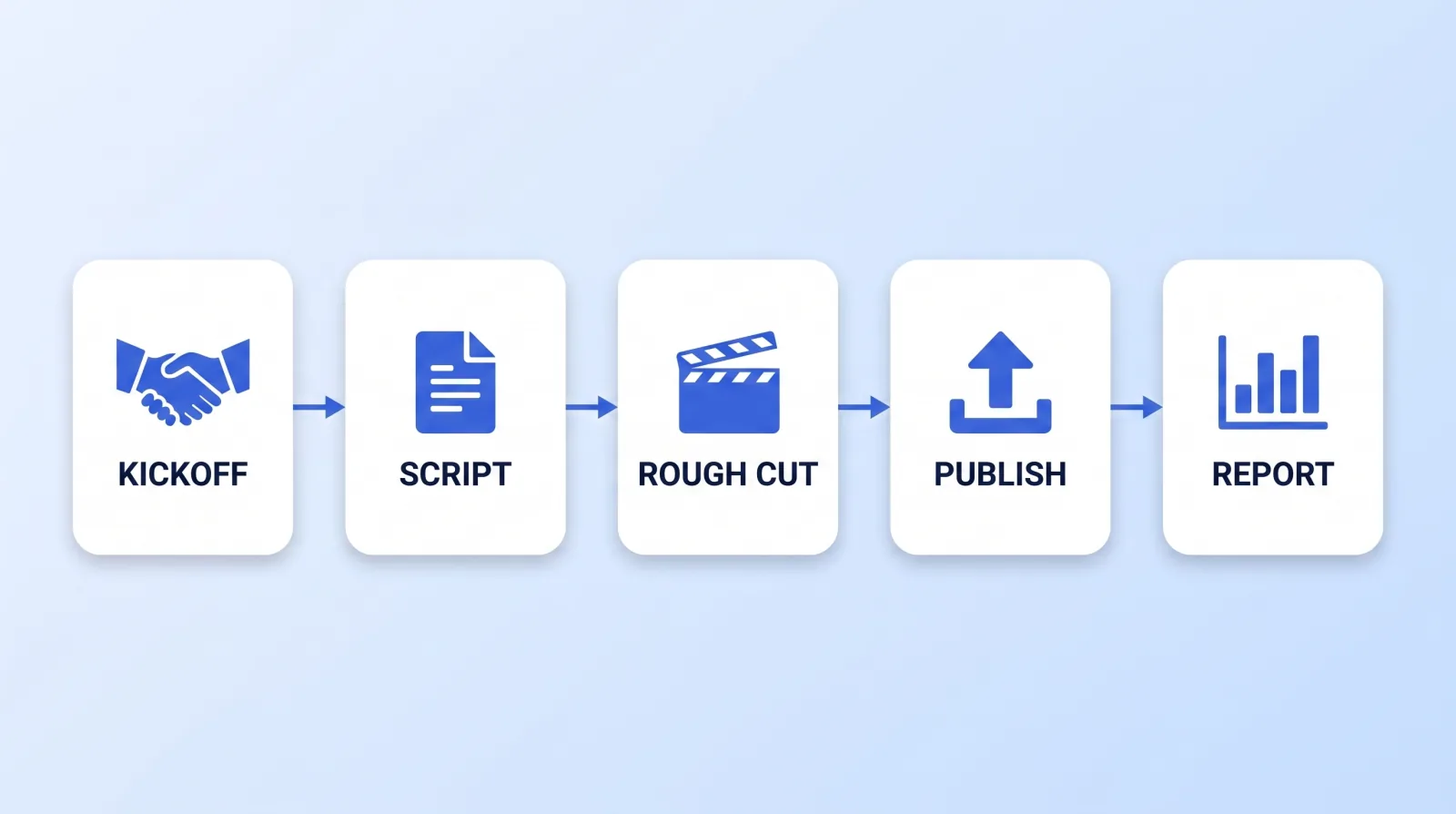
For a standard single-video integration, the schedule we run is:
| Stage | Days before live | Who approves |
|---|---|---|
| Kickoff call + brief signed off | 21 | Brand lead |
| Script or talking points approved | 14 | Brand lead + legal, if applicable |
| Filming complete | 10 | Creator |
| Rough cut delivered for review | 7 | Brand lead |
| Final cut delivered | 3 | Brand lead |
| Publish + disclosure verified | 0 | Creator |
Three rules make that calendar hold. Script approval is a gate, not a courtesy — don't film before it lands, because reshooting a claim the brand's legal team kills is the most expensive hour in the process. Every date is a business day. And the brand's review windows go on the calendar too, with a stated default: no response within 48 hours means approved as sent. Put that sentence in the contract. It's the single clause that keeps campaigns from drifting past the launch.
If an editor is cutting this, their brief needs the same rigour as any other project — the seven-section structure in how to brief a video editor transfers directly, with the brand's non-negotiable claims added at the top.
3. Disclosure Is a Production Task, Not a Legal Afterthought
This is the one that gets creators in genuine trouble, and it is entirely avoidable because it's a checklist item, not a judgement call.
The FTC's position is that a disclosure has to be hard to miss — in the endorsement itself, in plain language, and for video, visible in the video rather than only in the text around it. A line in the description box is not a disclosure. A hashtag buried at the end of a caption is not a disclosure.
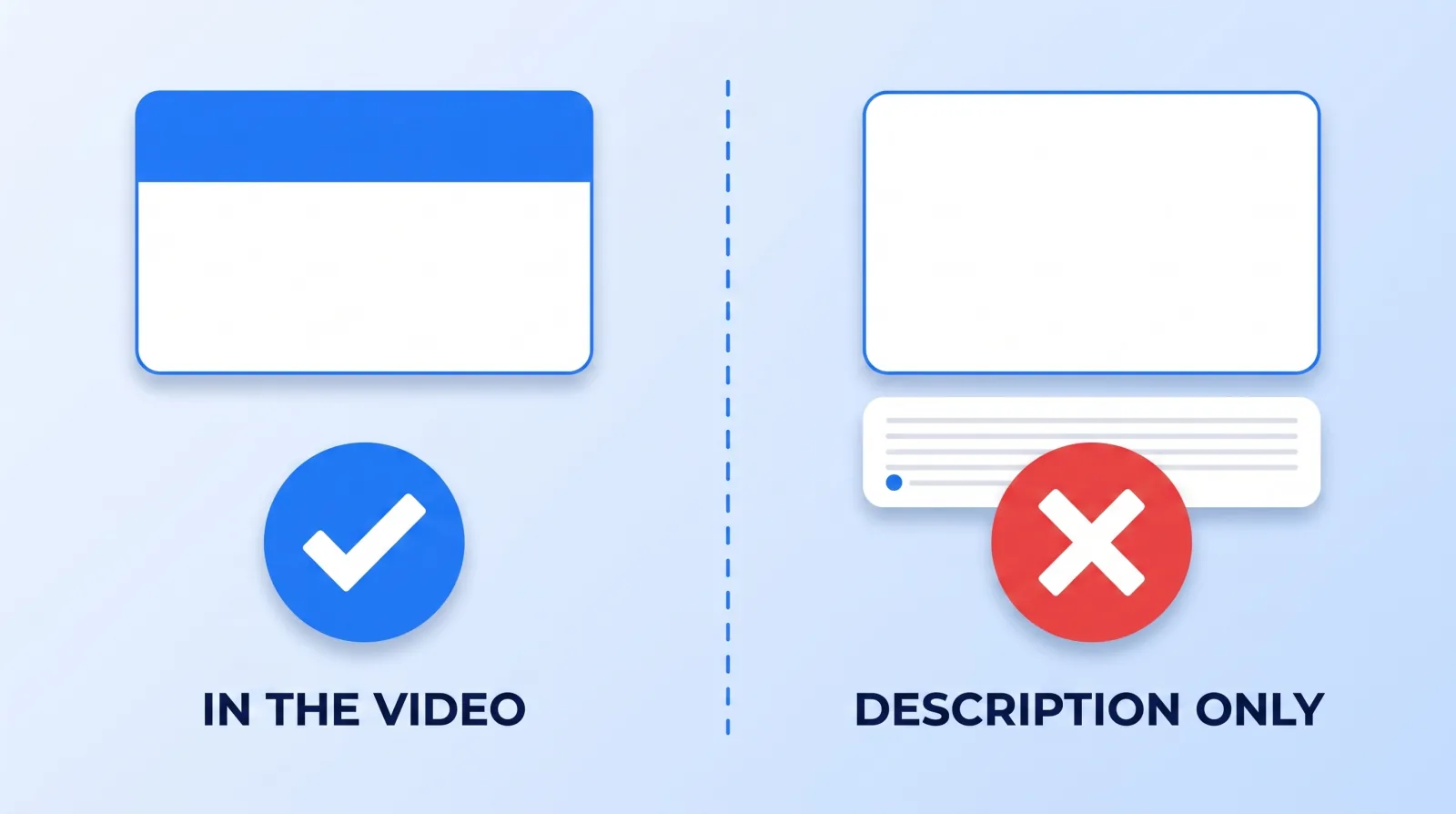
What we actually ship on every sponsored deliverable:
- Spoken disclosure in the first 30 seconds. "This video is sponsored by X." Said out loud, before the content starts, not at the end.
- On-screen text at the same moment, large enough to read on a phone, on screen for at least three seconds.
- The platform's own tool switched on. On YouTube that's the paid product placement checkbox, which surfaces an "Includes paid promotion" notice at the start of playback. Instagram and TikTok have equivalent branded-content toggles. Using the platform tool does not replace the in-video disclosure — you do both.
- For a livestream, repeat it. Viewers arrive throughout; a single disclosure at minute two doesn't reach the person who joined at minute forty.
Two adjacent traps. On-screen disclosure text has to survive the crop when the video is cut down for Shorts or Reels, so keep it inside the vertical safe zone — the same constraint we lay out for burned-in versus closed captions. And any music needs a license covering commercial use: a Content ID claim on a brand deal doesn't just cost you revenue, it puts an ad on your client's campaign.
4. Cap Approval Rounds in the Contract, Then Hold the Line
Two rounds. Say it in the contract, price the third and every one after it as a change order, and describe what a round actually is: one consolidated set of notes from the brand, delivered in one document, within the agreed window.
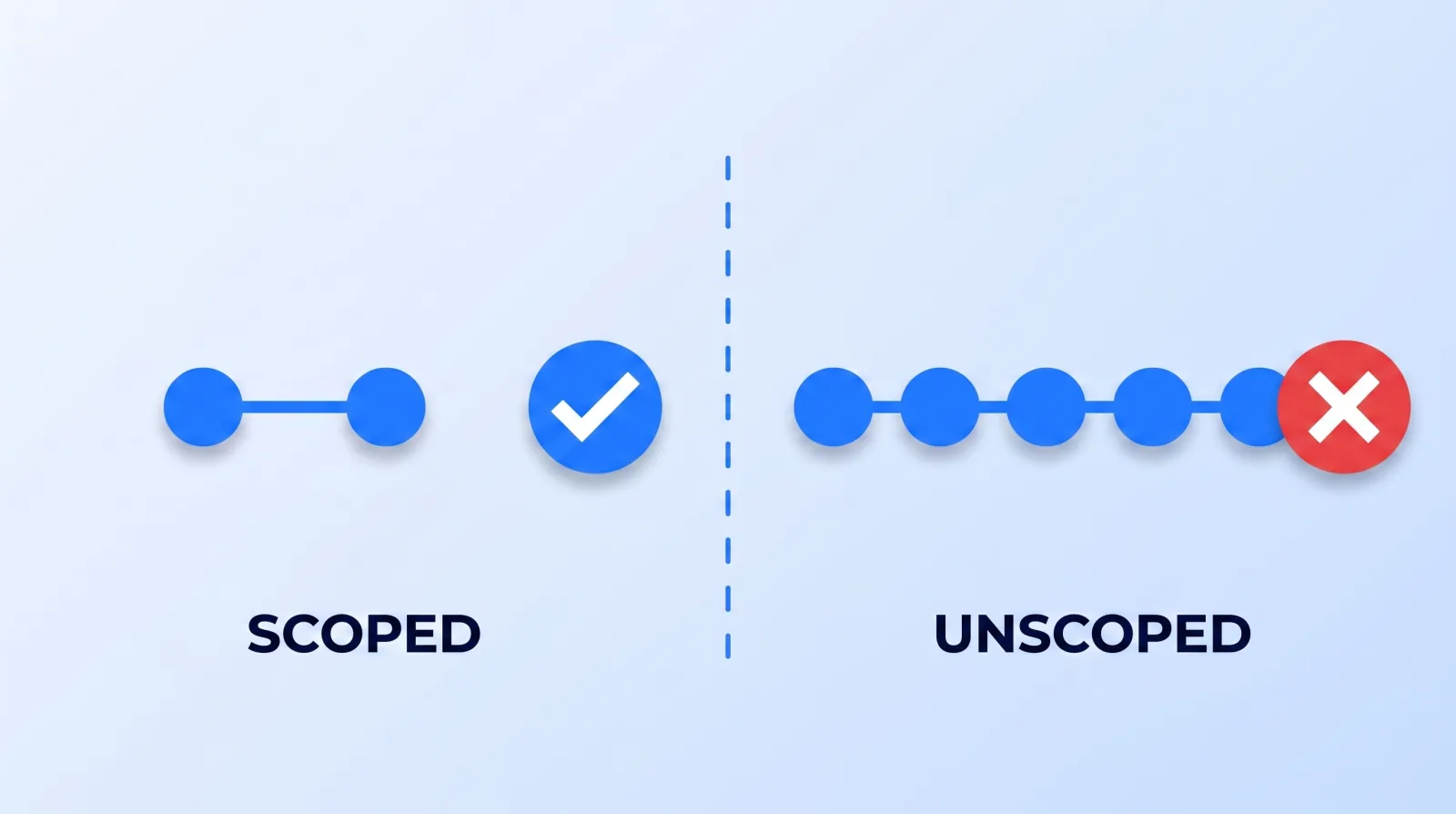
Unlimited revisions are rarely bad faith. They're the symptom of an unaligned brand team — three stakeholders each seeing the cut for the first time, each with one small note. The cap doesn't only protect your margin; it forces the brand to consolidate internally before sending notes, which is what you actually want.
Keep review in a tool that threads and timestamps comments against the frame — Frame.io or equivalent. Notes arriving as voice memos and screenshots across three channels is how a two-round campaign becomes a five-round one without anyone deciding it should. Run contracts and change orders through something that keeps a record; Hello Bonsai is what we point solo creators toward.
5. Send the Wrap Report Nobody Asked For
Seven days after publish, send a one-page report. Most creators never do, which is exactly why it works: the brand manager has to justify the spend internally, and you've just written their slide for them.
| Metric | Where it comes from |
|---|---|
| Views, and views in the first 72 hours | Platform analytics |
| Average percentage viewed | YouTube Studio |
| Retention at the integration timestamp | Retention graph, screenshot it |
| Clicks on the tracked link or code redemptions | Brand's own data — ask for it |
| Top three audience comments mentioning the product | Manual pull, 10 minutes |
Retention at the sponsored segment matters most and is the number brands almost never see. If viewers stayed through your integration, that's the strongest possible argument for the next deal, and no rate card can dispute it. Which metrics are worth reporting at all is the same question we work through in our breakdown of YouTube KPIs that actually matter.
Close with one sentence proposing what's next: a second video, a Shorts cut of the best-performing segment, a dedicated commercial edit for their own paid media, or a quarterly retainer. Benchmarks from IZEA's creator economy research and the Influencer Marketing Hub rate reports help price that follow-up, but the report itself is the leverage.
The Pre-Publish Gate
Run this before anything goes live. It takes five minutes.
- ✅ Final cut matches the last approved version — no silent changes after sign-off.
- ✅ Spoken disclosure in the first 30 seconds, on-screen text at the same moment.
- ✅ Platform disclosure toggle switched on for every placement.
- ✅ Every brand claim in the video traces back to something the brand approved in writing.
- ✅ Tracked link or promo code tested by clicking it on a phone, not just a desktop.
- ✅ Product name, spelling, and logo lockup verified against the brand's style guide.
- ✅ Music and stock licensed for commercial use, licenses saved with the project.
- ✅ Publish time confirmed in the brand's timezone, not yours.
The Bottom Line
A signed contract is the start of the work, not the end of the sale. The creators earning six figures from sponsorships are running kickoff calls, backwards-planned calendars, capped revision rounds, and a wrap report — which is to say they're operating like a small agency rather than a person who got an email from a brand.
None of it is difficult. All of it has to be decided once, written into the contract, and then run the same way on every deal. The measure isn't whether this campaign went well. It's whether the brand manager can reorder without thinking about it.