Instagram Extended Its Originality Rules to Photos and Carousels
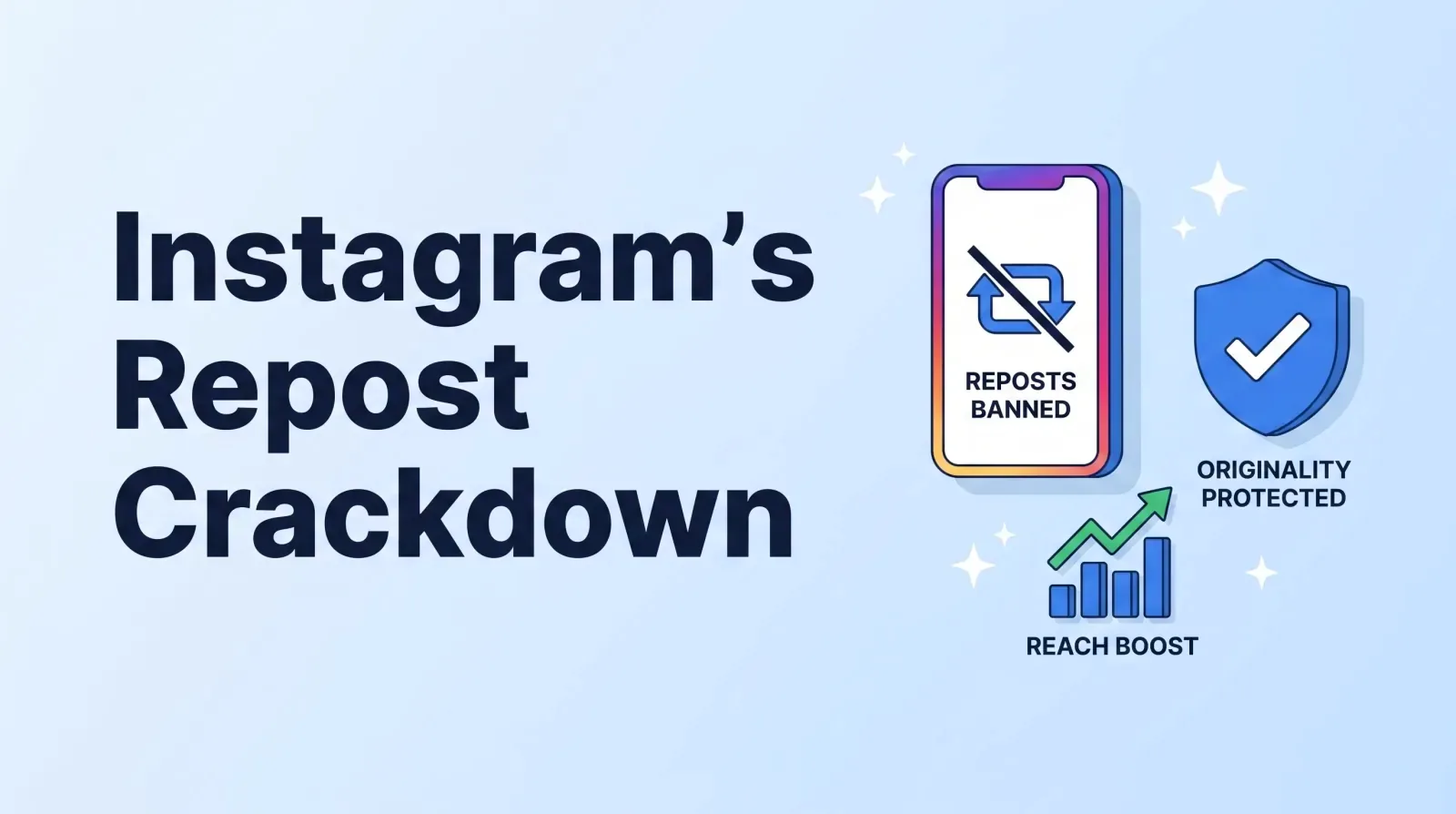
On April 30, TechCrunch and Tubefilter reported that Instagram expanded its existing anti-repost policy — previously limited to Reels — to cover photos and carousels. Accounts classified as content aggregators are removed from recommendation surfaces, which leaves more room for original creators.
This is more than a vague "we're prioritizing original content" signal. In Instagram's own announcement, accounts that "primarily post unoriginal content in photos or carousel posts, in addition to reels, will no longer be shown in places where we recommend content." Your followers still see your posts; people who don't follow you stop being shown them. An account becomes eligible again "when a significant percentage of their recently posted photos, carousels, and reels are considered original in a 30-day period," calculated on a rolling basis, and you can check your standing and appeal in Account Status. Instagram publishes no repost count that triggers it, and no percentage that restores it.
What's Actually New (and What Was Already in Place)
Instagram introduced the Reels version of this policy in 2024. What changed on April 30 is scope: the same protections now apply to photos and carousels, per Instagram's announcement:
| Format | Recommendation penalty | Before April 30 | After April 30 |
|---|---|---|---|
| Reels | Not recommended to non-followers | ✅ Active | ✅ Active |
| Photos (single) | Not recommended to non-followers | ❌ | ✅ Active |
| Carousels | Not recommended to non-followers | ❌ | ✅ Active |
| Stories | No recommendation surface | N/A | N/A |
The practical implication: sports highlight accounts, meme pages, celebrity photo archives, and brand accounts that rely on UGC reposts are all in scope now. If a large share of what you post is content you didn't create, this caps your reach to people who don't already follow you. YouTube followed on October 1, 2026 with its own version for Shorts: here's what YouTube's Shorts original content update changes.
What "Original" Actually Means Under the New Policy
Instagram's original content guidelines spell out the standard, and it's higher than many creators assume.
Does NOT qualify:
- Downloading a TikTok and reuploading with or without the watermark
- Adding a border, caption overlay, or speed adjustment to someone else's clip
- Screencapping and reposting a carousel you didn't make
- Sourcing a viral clip from another platform and putting a music track over it
Does qualify:
- Original footage you filmed — on any camera, including a phone
- A remix or duet where your contribution is substantial (commentary, transformation, analysis)
- Stock footage where you've built a meaningful original edit around it
- A carousel built from your own images, even if the subject is trending
Instagram's own phrase is "materially edited": additions that "meaningfully enhance" the content you're using, such as overlaid text "that does more than describe what's happening in the photo or video." If a viewer would see your version as essentially the same content as the source, it doesn't clear the bar. The test is editorial, not technical.
The Six-Point Check Before You Post
Run every piece of Instagram content through this before publishing:
- ✅ Is this footage I (or my team) filmed? If yes, cleared. If no — does my edit materially transform the source?
- ✅ Am I reposting a client's original content? The client's account earns the originality credit, not the agency account doing the posting.
- ✅ Is the audio properly licensed? Epidemic Sound, Artlist, Meta's free audio library — cleared. Ripping trending audio from another creator's Reel doesn't make your post original.
- ✅ Is most of what I posted in the last 30 days someone else's work? If yes, your account may already be out of recommendations. Check Account Status, and make original posts a large share of what you publish again: eligibility is judged on a rolling 30 days.
- ✅ Is this a carousel built from original images? Yes → cleared. Screenshots, downloaded images, or repurposed design assets → carries the same recommendation penalty as a reposted Reel.
- ✅ Is this a brand account sharing customer UGC? An unedited customer video reposted verbatim hits the penalty. A branded edit with your commentary, intro frame, or meaningful context clears it.
The Opportunity Side (Getting Less Coverage Than the Penalties)
Recommendation surfaces are how people who don't follow you find you; Instagram describes them as "giving creators ways to get discovered by people who don't follow them." When aggregator accounts are cut from those surfaces, that recommendation inventory doesn't disappear. It reallocates.
Accounts already publishing original Reels and carousels consistently stand to gain the most, because they no longer compete with aggregators for the same slots. Instagram says 75% of its US recommendations already come from original posts.
This is a direct tailwind for creators who've been doing the right thing. There's no action required beyond continuing to post original content; the algorithm is doing the redistribution.
What to Do If Your Reach Already Dropped
Check Account Status first: it shows whether your account is limited, and it's where you can appeal. Then cut reposts to zero. Instagram restores eligibility when "a significant percentage" of your recent posts over a rolling 30 days are original, so the fastest way back is to stop reposting entirely and publish original content at whatever cadence you can sustain.
Under the current policy, a few well-made original posts a week beat a stream of reposts.
If building consistent original content at that cadence feels like the bottleneck, the issue is usually production capacity, not ideas. The cross-platform short-form playbook covers how to generate Reels, TikToks, and Shorts from a single filming session. If editing is the actual bottleneck, the video editor brief framework is where to start — it's the structure that lets external editors produce original-quality work from your raw footage without three rounds of revisions.
At Mark Studios we've run 8,000+ projects across creator and brand accounts, including short-form video editing. Accounts that treat original-content production as a system rather than an ad-hoc effort don't feel this policy as a constraint. It only stings if you've been patching holes with reposted content instead of building the production rhythm.
The Bottom Line
Instagram expanded its original content enforcement to photos and carousels on April 30, 2026. Accounts that primarily post others' work stop being recommended to non-followers until a significant percentage of their posts over a rolling 30 days are original. Aggregator accounts lose reach to new audiences; original creators gain the recommendation space they leave. Audit your last 30 days of content, cut any repost pattern to zero, and treat this update as the reset that finally rewards consistent original production.