Monetized Is Not the Same as Profitable
Clearing YouTube's Partner Program bar — 1,000 subscribers plus 4,000 valid public watch hours in twelve months, or 10 million valid public Shorts views in ninety days — does not make a channel profitable. It makes it eligible. Those are audience thresholds, not financial ones, and a channel can cross every one of them while quietly losing money on each upload. If yours hasn't crossed it yet, one cost decision comes first, covered in should you hire a video editor before monetization.
Across 10,000+ projects and 100M+ views on work we've edited, including YouTube strategy engagements, the pattern we see most often isn't a channel that can't grow. It's a channel whose owner has never once written down what a single video costs to make. Ask a creator their subscriber count and you get a number instantly. Ask their cost per video and you get a pause. That pause is the whole problem: without it, there is no way to know whether the next upload is an investment or a leak.
1. Cost Per Video Is the Only Number That Matters
A channel's P&L starts at the video level, because that's the unit you actually buy. Every upload consumes the same five stages, and each stage costs either money or hours.
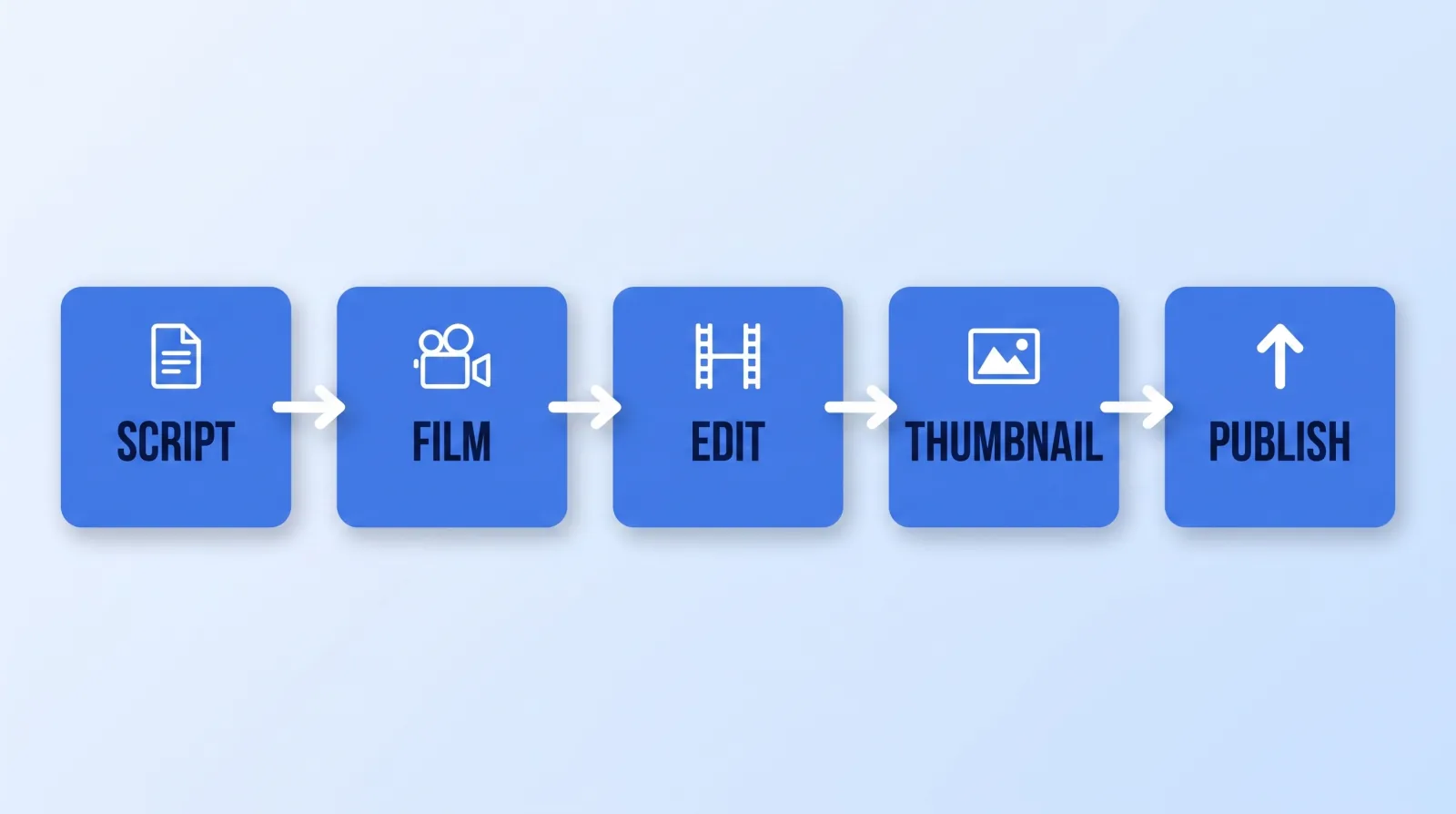
Here's an illustrative cost for one 10-to-15-minute long-form video at three production tiers. The DIY column assumes you value your own time at $40/hour — a conservative rate for anyone who could otherwise be doing client work.
| Stage | DIY (time-costed) | Hybrid (editor hired) | Full production |
|---|---|---|---|
| Scripting & research | 3 hrs · $120 | 3 hrs · $120 | $150–$400 |
| Filming | 2 hrs · $80 | 2 hrs · $80 | $300–$800 |
| Editing | 6–10 hrs · $240–$400 | $150–$450 | $400–$1,200 |
| Thumbnail | 1 hr · $40 | $25–$75 | $50–$150 |
| Publishing & packaging | 1 hr · $40 | 1 hr · $40 | included |
| Cost per video | $520–$680 | $415–$765 | $900–$2,550 |
Two things surprise people in that table. The first is that the DIY column is not cheaper — it's the same money, paid in hours instead of dollars, which is why creators who "can't afford an editor" are usually already spending more than one costs. The second is how narrow the gap is between DIY and hybrid: hiring the edit out buys back six to ten hours a week for roughly what your own time was already worth. Our full breakdown of what those services should cost is in how to price video production services and what video editing actually costs, and the operational side of running editors is in hiring and managing a global editing team.
2. The Fixed Costs Nobody Puts in the Spreadsheet
Cost per video is the variable half. The other half runs whether you publish or not, and it's the half creators consistently forget when they estimate profitability.
| Line item | Typical monthly | Notes |
|---|---|---|
| Editing software | $0–$70 | DaVinci Resolve is free and production-grade |
| Music licensing | $15–$60 | Per-seat on Epidemic Sound and peers — see YouTube music licensing |
| Stock footage / graphics | $20–$50 | Skippable for talking-head formats |
| Storage & backup | $15–$60 | Drives amortized + cloud archive |
| Review & delivery tooling | $0–$25 | Frame.io or equivalent |
| Transcription / AI assists | $12–$30 | Descript and similar |
| Fixed monthly total | $62–$295 | Before a single video is made |
Call it $150/month for a working solo channel. That's $1,800 a year of cost that exists before the first frame is shot — which sounds trivial until you compare it to what a channel below 50,000 monthly views actually earns.
3. Revenue Per Video, Told Honestly
AdSense pays on RPM: revenue per thousand monetized views, net of the platform's share under YouTube's published revenue-sharing model. RPM varies more by niche than by anything else you control, and the spread is enormous.
| Niche band | Typical long-form RPM | Views needed for $500/mo |
|---|---|---|
| Entertainment, gaming, vlogs | $1–$4 | 125,000–500,000 |
| Lifestyle, education, how-to | $4–$9 | 55,000–125,000 |
| Finance, B2B, SaaS, legal | $12–$35 | 14,000–42,000 |
Treat those bands as rough estimates rather than benchmarks. Niche is the single biggest reason two channels with identical view counts can be a hobby and a business respectively. A finance channel at 40,000 views a month clears its costs comfortably. A gaming channel at the same volume does not.
Which is why the channels that survive stop treating AdSense as the plan.
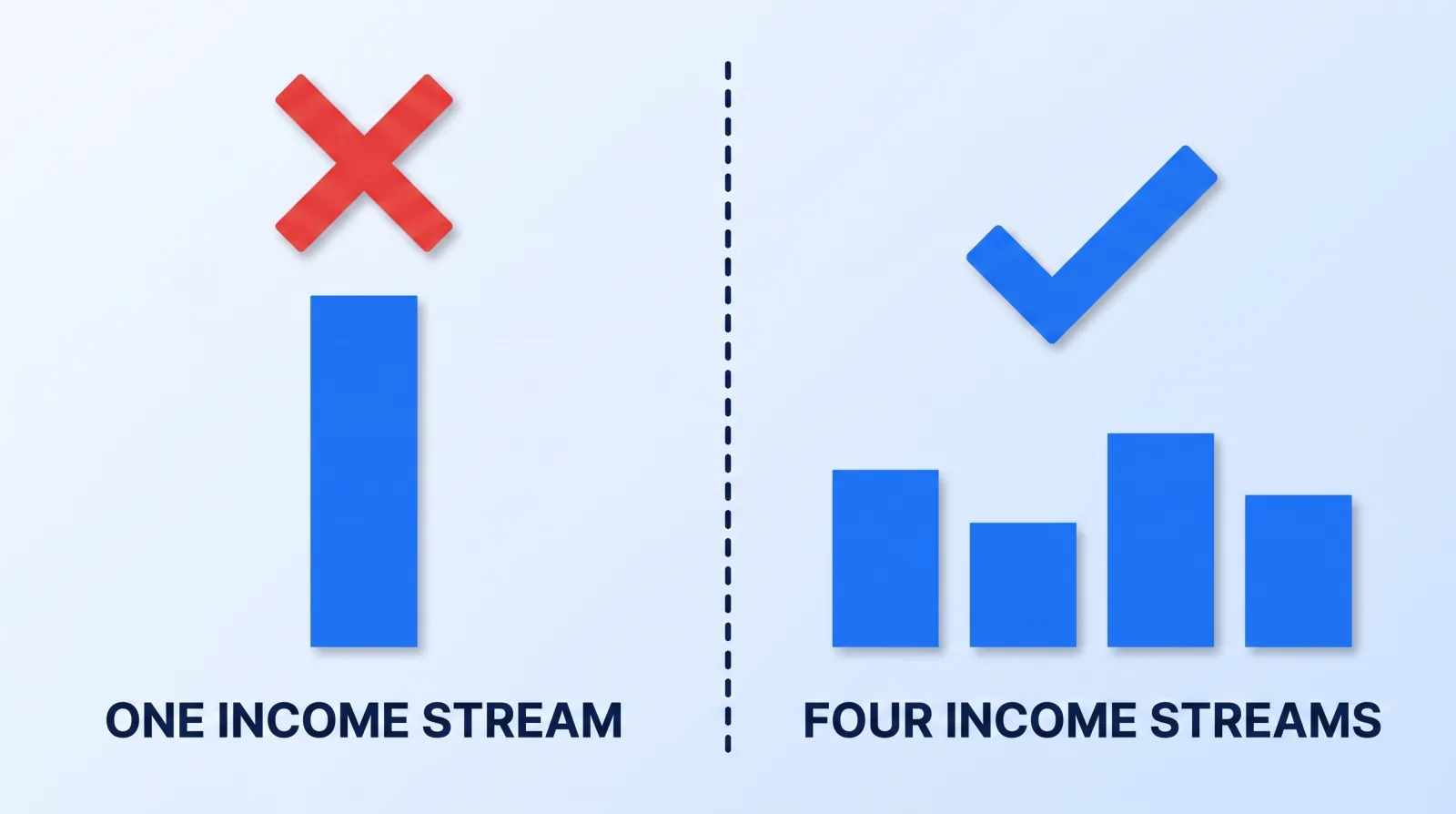
The four streams worth building, roughly in the order they become available: AdSense from day one of eligibility, brand deals from around 10,000 engaged subscribers, memberships and recurring fan revenue once a community exists, and your own product or service, which has no audience minimum at all and the best margin of the four. A channel earning across all four typically breaks even at a fifth of the views an AdSense-only channel needs.
4. The Break-Even Math, in One Line
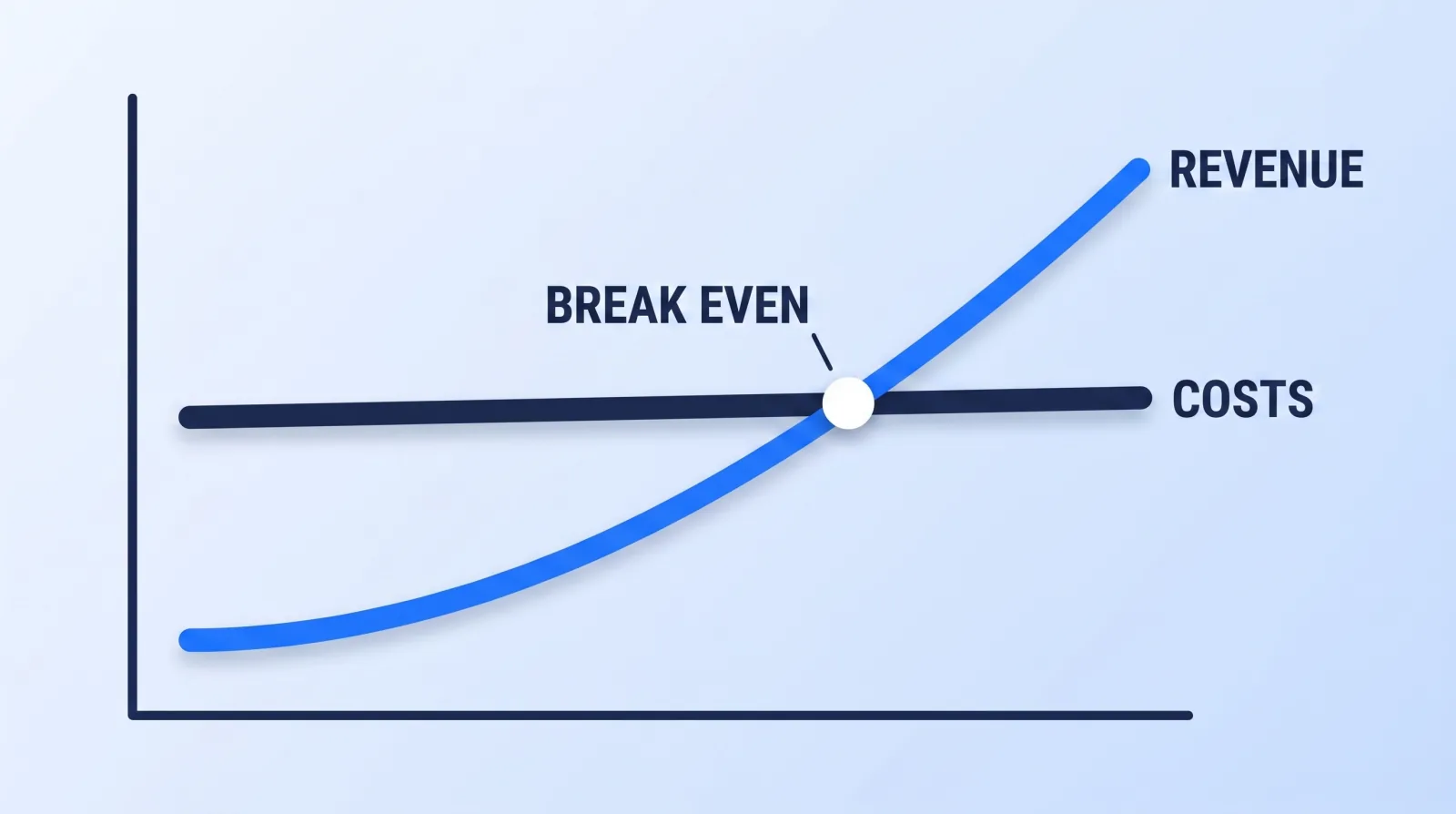
Everything above collapses into one calculation:
Monthly cost   = (cost per video × videos per month) + fixed monthly costs
Break-even     = monthly cost ÷ (blended RPM ÷ 1,000)

Worked example — hybrid production, education niche:
  Cost per video ......... $600
  Videos per month ....... 4        →  $2,400
  Fixed monthly costs .... $150     →  $2,550 total
  Blended RPM ............ $7
  Break-even views ....... 2,550 ÷ 0.007  =  364,000 views/month
364,000 views a month to break even on four videos is a sobering number, and it is the honest one for an ad-only education channel. Add one $2,000 brand deal a month and break-even drops to roughly 79,000 views. Add a $49 product converting at 0.2% of viewers and it drops again. The lever that moves break-even isn't cutting costs — it's revenue per view.
Track it against the three metrics that actually predict growth, covered in YouTube KPIs that actually matter. Cost per video and break-even views belong on the same dashboard as CTR and average percentage viewed.
The Pre-Publish Economics Gate
Run this once a quarter, not once a year. It takes twenty minutes with a spreadsheet.
- ✅ Cost per video written down, with your own hours priced at a real rate.
- ✅ Fixed monthly costs listed — every subscription, including the ones on annual billing.
- ✅ Blended RPM pulled from YouTube Analytics, not from a guess or a YouTuber's screenshot.
- ✅ Break-even views calculated and compared against your actual trailing 30-day views.
- ✅ Revenue streams counted. If the answer is one, that's the highest-leverage fix available.
- ✅ Cost per video divided by views per video — your true cost per thousand views, the number to drive down.
- ✅ Any format costing 2× the average checked against whether it earns 2× the return.
Step 7 is the one that changes behaviour. Most channels have one expensive format they keep making out of pride rather than performance, and finding it usually pays for the whole exercise.
The Bottom Line
A channel is a business with a cost structure, and the cost structure is knowable in an afternoon: cost per video, fixed monthly costs, blended RPM, break-even views. Creators who track those four numbers make different decisions — about formats, about hiring, about which video to cut — than creators who track subscribers alone.
Monetization is a threshold you cross once. Profitability is a number you either measure every month or find out about the hard way.