Is It Worth Hiring a Video Editor Before You're Monetized?
Yes, in two cases: your channel sells something besides ads (a service, a course, a product), or editing is the reason you miss uploads. If ad revenue is the only plan, hiring rarely pays for itself before you qualify for the YouTube Partner Program, which asks for 1,000 subscribers plus 4,000 qualified watch hours in the past 12 months, or 10 million qualified Shorts views in 90 days. Until then, YouTube pays you nothing.
The most upvoted reply in one r/NewTubers thread about finding an editor is blunt: "Don't bother hiring anyone until you're making the money FROM YouTube to pay for it." For an ad-only hobby channel, that's right. For a coach, consultant or founder whose channel exists to bring in clients, it's the wrong test, and a reply in the same thread makes the point: one consulting client "would potentially pay for 10 video productions."
Why Ad Revenue Can't Pay for the Edit Yet
Before the Partner Program, ad revenue is zero. After it, revenue stays small for a while: YouTube pays on RPM, revenue per thousand monetized views, under its published revenue-sharing model, and an early channel has few views to multiply. We worked the numbers in channel unit economics: at $600 a video, four videos a month and a $7 blended RPM, an ad-only education channel needs about 364,000 views a month just to break even. One creator paying for two edits a week put it more simply: "It takes me at least 20k views per video to break even."
Market rates make the gap concrete. Creators report paying $75–$200 for a long-form edit from an overseas freelancer and $300–$500 from an established US editor; every hiring route is priced out, with sources, in how much a YouTube video editor costs. At one video a week, even the low end is $300–$800 a month, and nothing comes back from YouTube to cover it.
Three Kinds of Small Channel, and Which Should Hire Early
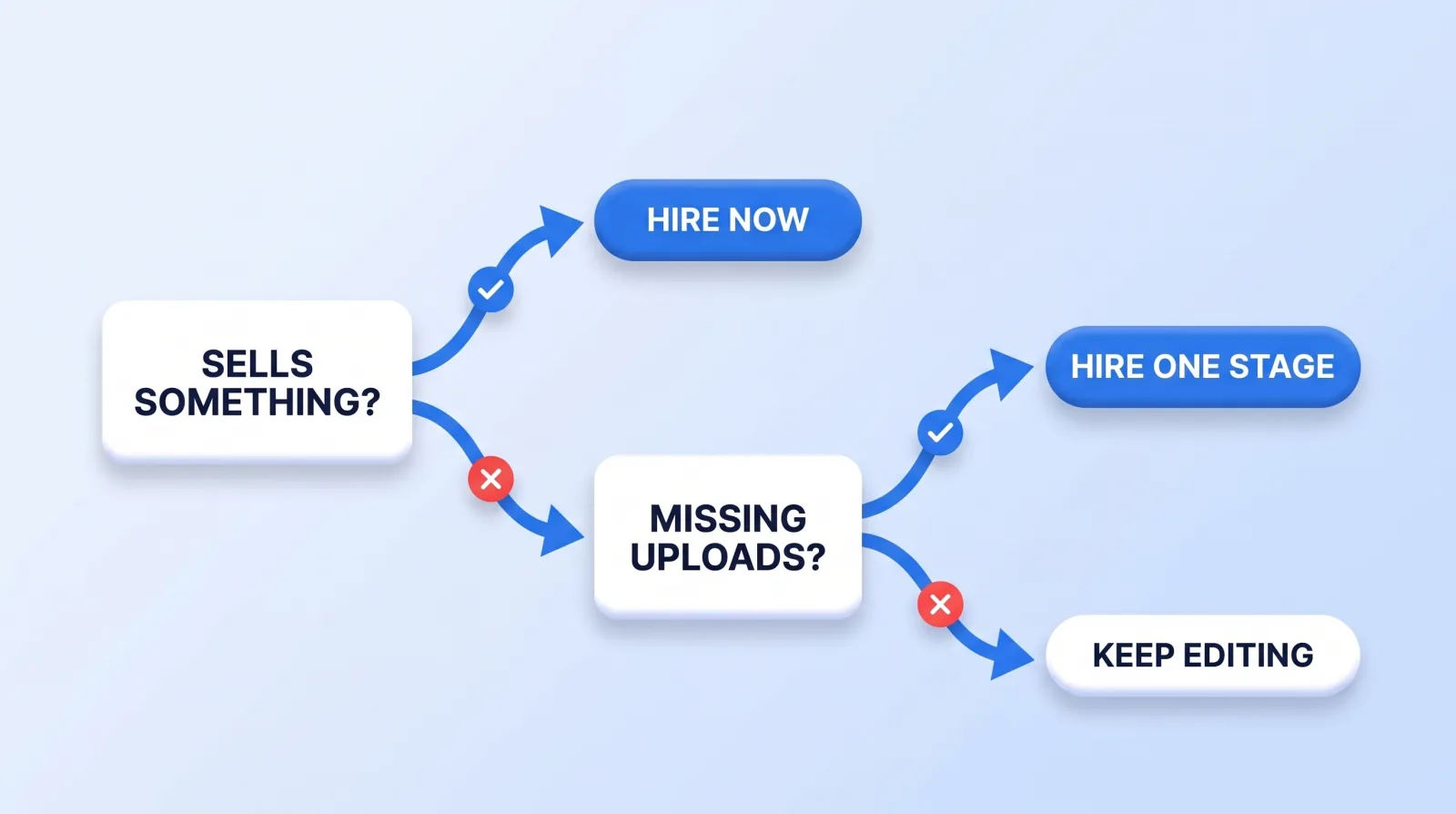
| Your channel | What pays for the edit | Hire before monetization? |
|---|---|---|
| Business or expert channel (coach, consultant, agency, SaaS, courses) | Leads and clients. One sale can cover months of editing | Yes, from the first video. Ad revenue isn't part of the math |
| Creator with a time wall (day job, burnout, missed uploads) | Your hours, and the uploads you'd otherwise skip | Partly. Hire one stage once your format is settled |
| Ad-only channel with time to spare | Nothing yet | No. Keep editing and put the money into the next video |
The first row is why we run coaches and consultants as their own track: the video is a sales asset, so the edit is judged by booked calls, not RPM.
The middle row is where most small creators sit. "I have a 9-5 job... sometimes I really feel burned out" is how one creator opened a thread asking whether to hire early. If the edit is why the upload slipped, the real cost of not hiring is a video that never went out, and a channel that doesn't publish doesn't reach 4,000 watch hours. We treat that as a scheduling problem in creator burnout is a production problem.
When the Math Flips: Price Your Hour, Not Your RPM
Without a business behind the channel, the honest comparison isn't RPM against the invoice. It's your hours against the invoice. Our editors log about 7.5 hands-on hours for a standard 10-minute talking-head video, and the real hours behind a 10-minute video shows where the decision flips: if an hour of your time is worth about $15, you're cheaper than the market; at $50, buying wins at most price points.
Use the value of the hour the edit actually displaces, not an aspirational rate. An empty Tuesday evening is cheap. A skipped client call isn't.
Hire One Stage Before You Hire an Editor
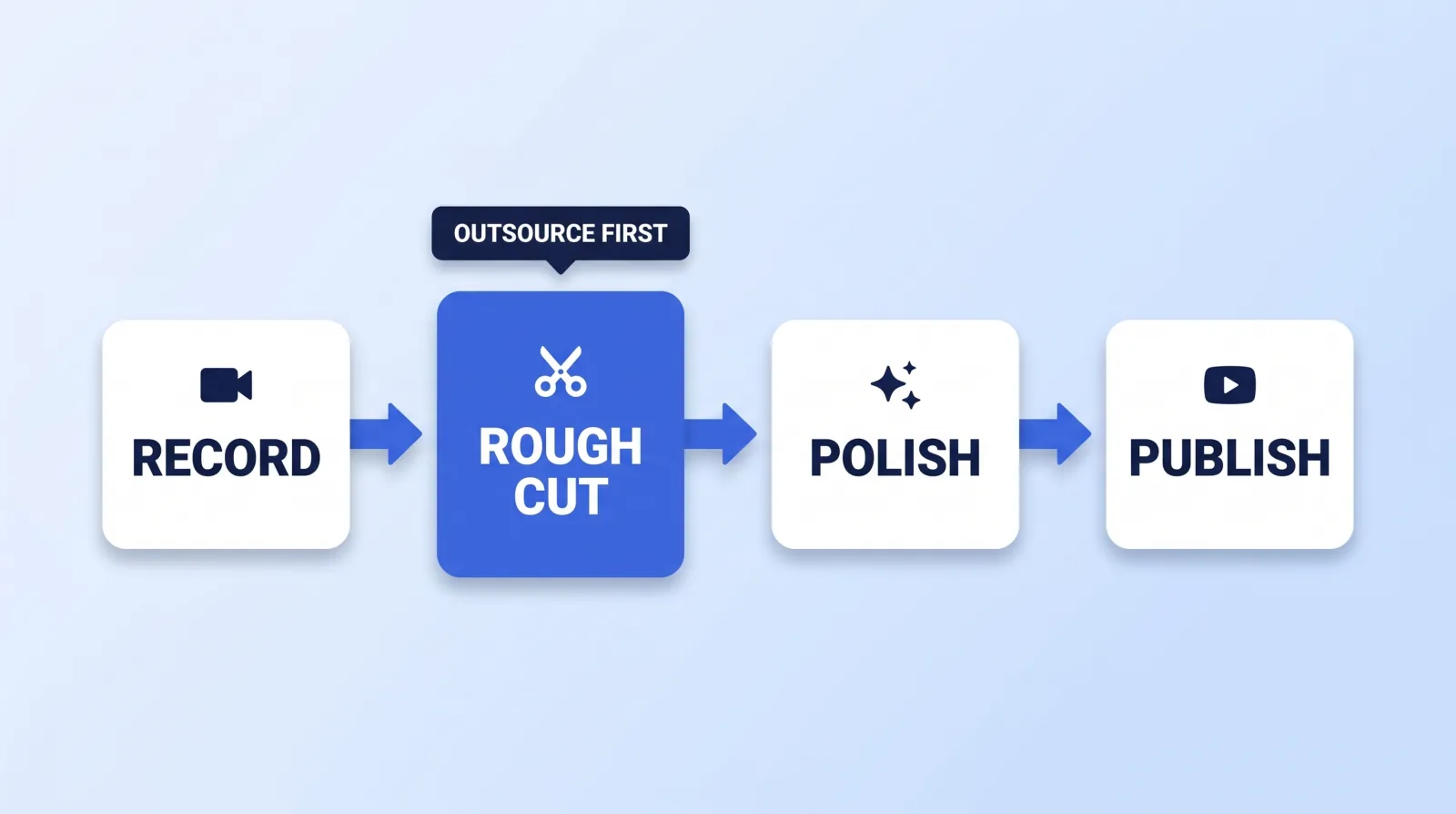
You don't have to buy a full edit to buy your time back. In our editors' logs, sync, assembly and the rough cut take 2.5 to 4.25 of the 6 to 11.5 hands-on hours in a 10-minute video: culling takes, cutting dead air, removing the retakes. It's also the stage that needs the least of your taste, because a rough cut follows your script. Keep the polish (b-roll, graphics, captions, thumbnail) while you learn what your channel looks like, and hand it over later.
Two things make a first hire work at small scale. First, know what you want before you pay. One creator admitted: "I tried paying an editor without even knowing what I wanted." A one-page brief with a reference video fixes that, and the template is in how to brief a video editor. Second, pay for one test edit on real footage before committing, as covered in how to vet a video editing service. If you're choosing between a marketplace freelancer and a managed team, our comparison of freelance marketplaces and managed teams lays out the trade-offs.
Budget Is the Most Common Objection, and It's Usually Scope
We've delivered 10,000+ projects for 4,500+ clients, and the budget conversation comes up constantly. In a review of 704 buyer conversations in our own inbox, 69 buyers (about 1 in 10) raised budget as a problem. Among the new leads in that group, about a third (15 of 47) still ordered, usually after cutting the job down: fewer videos, a shorter finished length, or one stage instead of the whole edit. A smaller scope that ships every week beats a full edit you can afford for one month.
The Pre-Hire Check
- Does the channel sell anything besides ads? If yes, budget editing as marketing and hire now.
- Did the edit cost you an upload in the last month? If yes, outsource the rough cut first.
- Can you describe your format on one page, with a reference video? If not, publish more until you can.
- Have you logged your own edit hours for two weeks? Guesses run low.
- Can you fund at least two months of edits from outside YouTube? One video is a sample; judging an editor takes several.
- Do you know your all-in cost per video, fees and add-ons included?
The Bottom Line
Monetization is the wrong trigger for hiring a video editor. The right triggers are a channel that sells something, and an upload schedule the edit keeps breaking. If neither is true yet, keep editing and spend on the next video. If one is, start by buying back the rough cut, not the whole edit.
When you're ready to hand some of it off, our YouTube video editing service shows what's included.