How Many Clips per Podcast Episode?
Cut five to ten clips from each weekly episode: enough to post one a day, few enough that every clip is a real moment. That's the range many of our podcast clients run on a weekly cadence. Don't start from the number, though. Start from how often you'll post, keep only the moments that pass the clip test below, and post fewer if an episode can't fill the quota honestly.
The audience on both sides of that clip is enormous. YouTube says podcasts on its platform reach more than 1 billion monthly viewers, and YouTube Shorts average over 200 billion daily views. Both figures, with their dates and the rest of the market data, sit on our video podcast statistics and short-form video statistics pages.
Work Backward From How Often You'll Post
The clip count is your posting schedule divided by how many episodes you publish. For a weekly show:
| Posting goal | Clips per weekly episode | Notes |
|---|---|---|
| 3 a week, one platform | 3 | A sustainable start for a solo host |
| Daily, one platform | 7 | What one podcaster on r/podcasting asked an editor for: "7 shorts a week" |
| Daily on Shorts, Reels and TikTok | 7 | The same seven clips, exported once per platform |
| Twice daily | 14 | Only a long, dense episode can supply it |
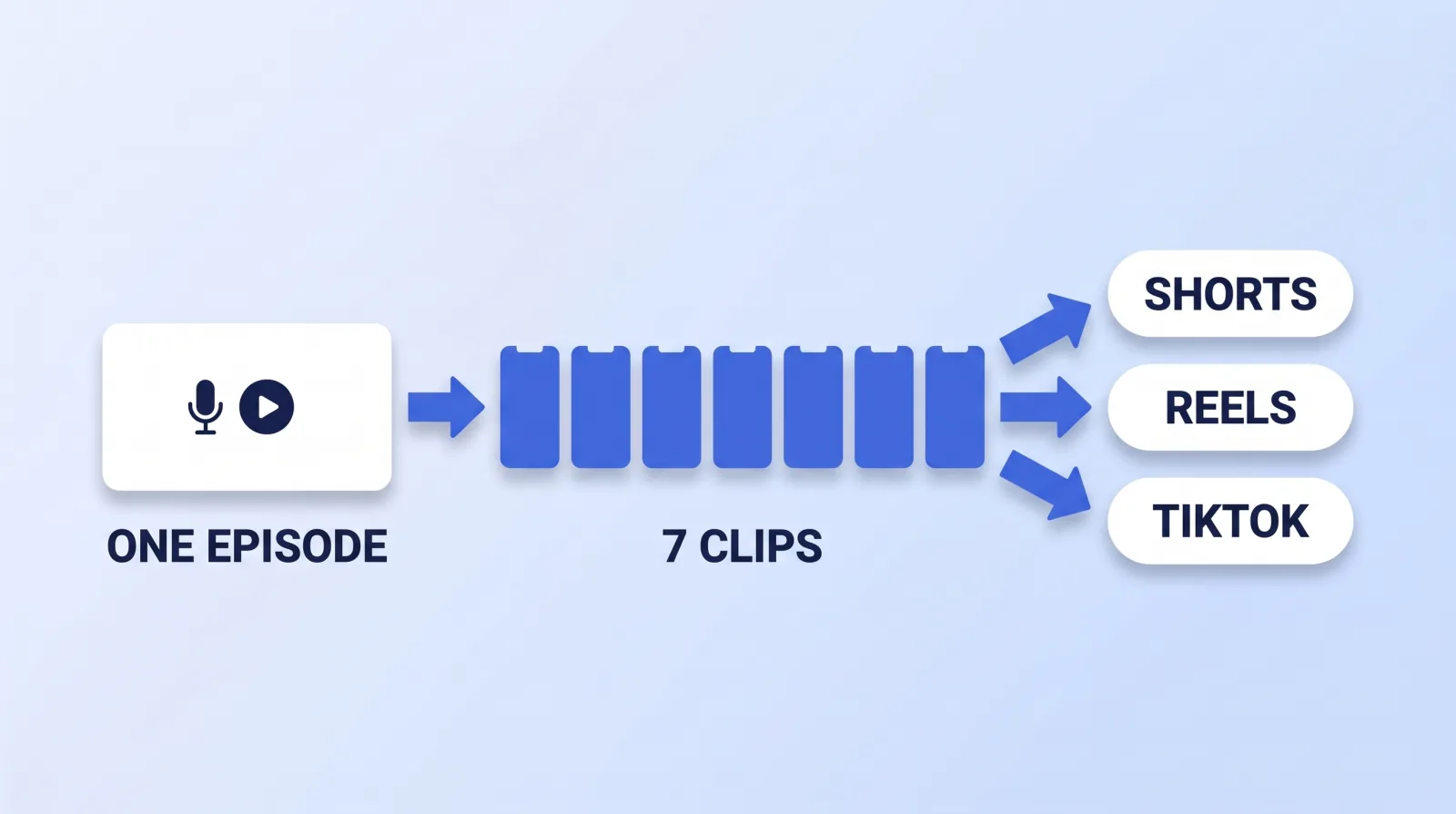
Cross-posting multiplies posts, not clips. One well-chosen clip can run on all three platforms as long as each gets its own clean export rather than a watermarked re-upload. The platform-by-platform differences are in our cross-platform playbook for TikTok, Reels and Shorts. A daily presence on three platforms therefore needs seven clips a week, not twenty-one.
The Clip Test: Which Moments Are Worth Posting
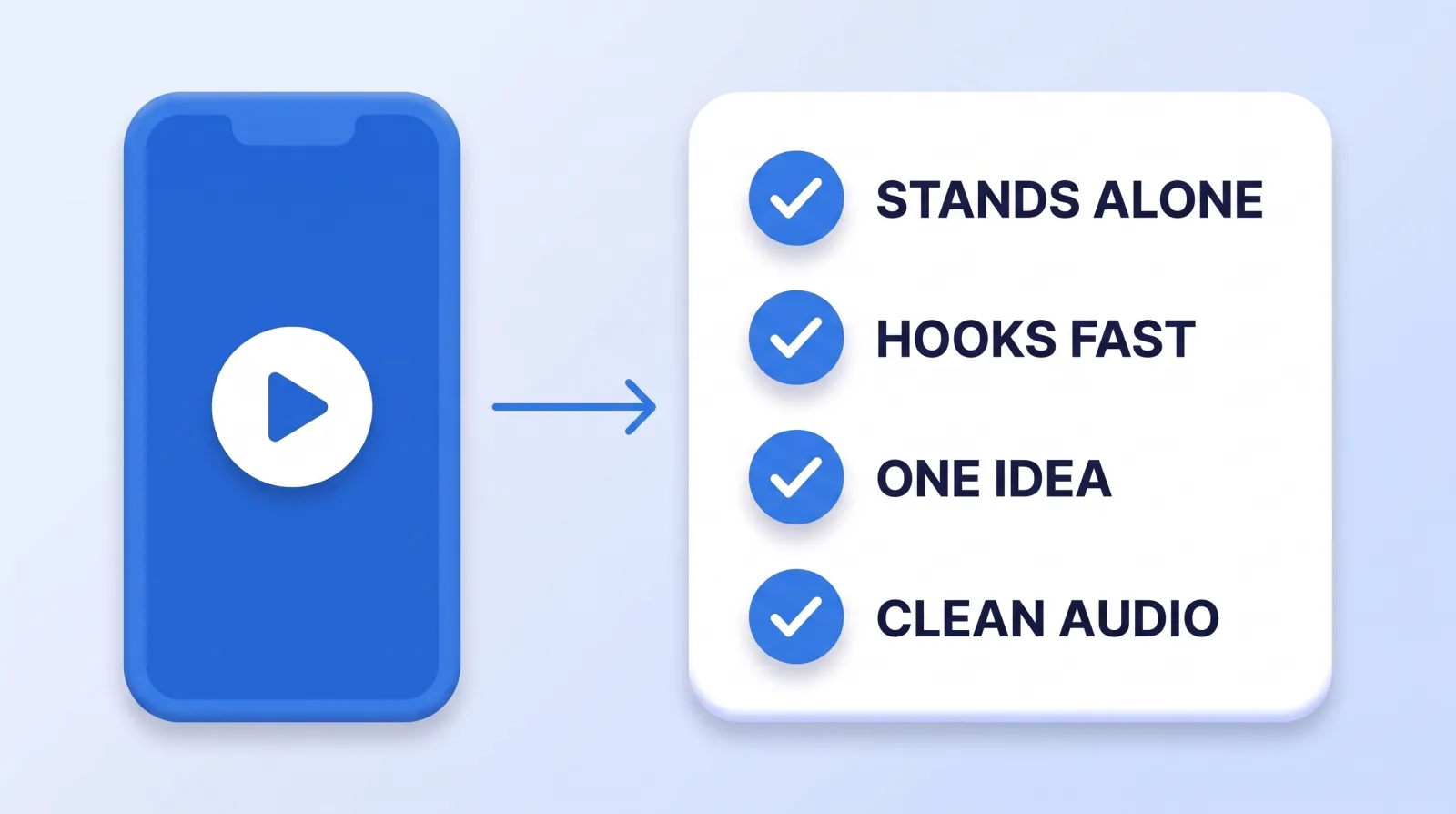
A podcaster comparing AI clippers summed up the job: "it's not the cut, it's the select." Cutting a clip takes minutes; choosing it is the skill. A moment earns a clip when it passes four checks:
- It stands alone. No "like I said earlier", and no guest who needs an introduction the clip doesn't give.
- It hooks fast. A claim, a number, a question or a disagreement in the first two seconds, not a greeting. YouTube counts a Shorts view each time a Short starts or replays, so the opening is the only part every viewer is sure to see.
- It holds one idea and pays it off. If the payoff needs a second idea, it's two clips, or none.
- It sounds clean. No crosstalk over the key line, and captions short enough to read inside each platform's safe zones.
This is why automated clippers tend to over-produce. One podcaster who tried Riverside's Magic Clips and OpusClip found that "they often don't capture the real 'aha moments'". A tool can surface twenty candidates in a minute. The time goes into picking the seven that pass. For long videos that aren't podcasts, the 10-cut framework for repurposing long-form into Shorts breaks an episode into clip types.
Record With the Clips in Mind
Clips are easier to find when the episode is built for them. Frame each camera so a vertical crop still holds the speaker; the setup is in how to frame one take for 16:9 and 9:16. Give every voice its own microphone, so a clip never carries someone else's crosstalk. And note the timestamp when something lands during the recording. That list is the most useful thing you can hand an editor, because it points them at the moments you already know worked in the room. The camera side is covered in our multi-cam podcast workflow.
What Clips Cost, and Where the Money Goes
Clips are cheap to cut and expensive to choose, and prices reflect which half you're buying. Podcasters on r/podcasting are told to "expect $20–$50 per clip" from a freelancer, and agency Shorts pricing runs up to about $94 each, as sourced in how much a YouTube video editor costs. At seven a week, roughly 30 clips a month, that's about $600–$1,500 a month at the community-reported rate. A clip that fails the test costs the same to cut as one that passes, which is why selection matters more than the per-clip price. If you're weighing a freelancer against a managed team, our comparison of freelance marketplaces and managed teams lays out the trade-offs.
Short-form is also the service buyers ask us for most. Across 698 first messages from buyers in our inbox, 240 (34%) asked for Shorts, Reels or TikTok edits, more than asked for YouTube long-form. They call them "clips", "Shorts" and "Reels"; only two wrote "podcast clips". We've delivered 10,000+ projects for 4,500+ clients, and a clip plan is one of the first things we scope with a new podcast: how often you'll post, where, and who picks the moments.
The Bottom Line
Five to ten clips per weekly episode is the working range, but the number is an output, not a target. Your posting schedule sets the quota, and the clip test decides how many make it. Seven strong clips cross-posted to three platforms beat twenty-one weak ones.
If you'd rather hand off the select as well as the cut, our podcast video editing service cuts captioned vertical clips from every episode, and we run podcasters as their own track.