

Your View Count Is About to Jump, and You Did Nothing
On August 24, 2026, YouTube starts counting a view the moment a video begins playing — no minimum watch time, across long-form, live, podcasts and Shorts. YouTube's own metrics documentation states it plainly: views are counted the moment a video starts to play across all formats. Long-form and live previously needed roughly 30 seconds of watch time before a view registered.
The number on your video is going to rise. Nothing about your content, your audience or your revenue changed.
We've delivered more than 10,000 video projects, and our clients' channels have generated 100M+ views — and the pattern with every metric redefinition is the same. The danger is never the change. It's the two weeks afterward, when everyone reads the new number against the old benchmark and makes a decision on the difference. Someone will conclude a mediocre video was a breakout. Someone will renew a sponsorship at a rate calculated from an inflated denominator. This post is about not being that person.
1. What Actually Changed
One sentence: a view now starts at the first frame.
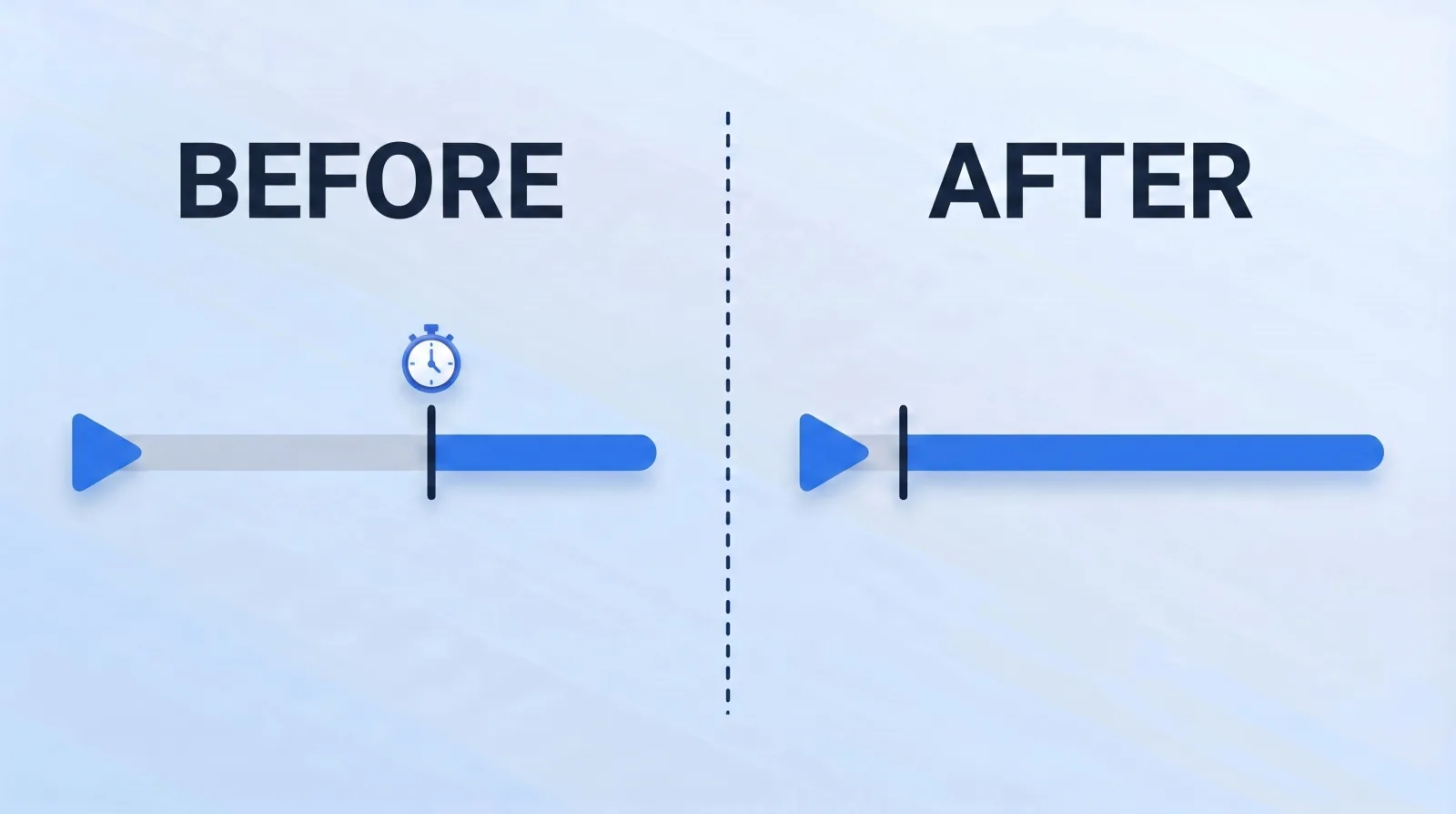
The change standardises all formats onto one definition. Shorts already worked this way — YouTube moved Shorts to count-on-play on March 31, 2025, matching the method TikTok and Instagram already used. Long-form, live and podcasts now join them, as Search Engine Journal reported when the update was announced.
Three things worth pinning down:
- It is not retroactive. Existing videos keep their historical counts. The new rule applies to plays from August 24 onward, which means your channel's own history becomes an inconsistent series at that date.
- It applies to autoplay. A view is counted from the first frame of playback whether the viewer chose the video or it started on its own.
- Replays count. As on Shorts, a replay registers as a play.
2. What Did Not Change: The Money
This is the part that matters most and the part being misreported hardest.
Your earnings do not change. YouTube states directly that the update "won't impact your YouTube Partner Program (YPP) earnings or eligibility." Payment continues to run on engaged views and engaged watch hours, and YPP eligibility on qualified Shorts views and qualified watch hours.
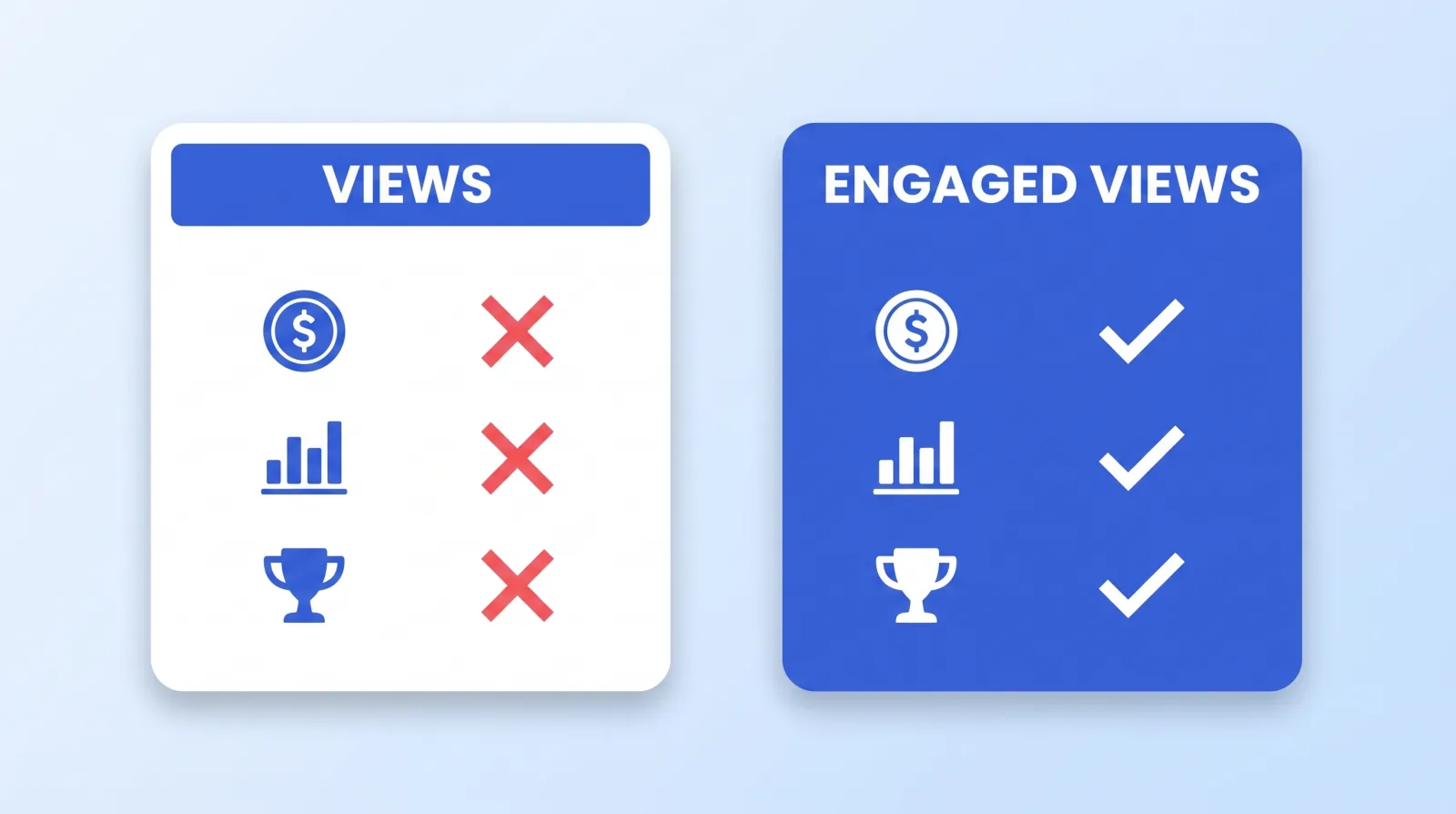
In other words, the metric that got looser is the public vanity number. The metric that pays you is untouched and still requires someone to actually watch.
Here is the rename that trips people up: the old definition of a view is now what YouTube calls an "engaged view." In YouTube's own explanation, a view counts from the very first frame, while an engaged view means watching past that first frame or clicking to watch. So the number you have been optimising against for years still exists — it just moved and got a new name.
| Views (new definition) | Engaged views | |
|---|---|---|
| Counted from | First frame of playback | Past the opening seconds |
| Shown on the public watch page | Yes | No |
| Drives YPP earnings | No | Yes |
| Basis for CTR, AVD, retention | No | Yes |
| Where to find it | Everywhere | Analytics → Advanced mode |
3. The Real Damage Is to Your Benchmarks
The public counter is cosmetic. Your ratios are not, and every ratio with views in the denominator is about to move without any underlying change in performance.
YouTube documents how each engagement metric is counted separately from the view counter, which is why the two can now move in opposite directions. Think about what that does to the standard diagnostic set:
- Click-through rate is impressions to clicks, and clicks now convert to views more readily. The relationship between the CTR you see and the audience you actually earned is no longer the one you calibrated against.
- Average percentage viewed gets diluted by every play that ends immediately. Those plays now sit in the denominator as full views.
- Subscribers per 1,000 views falls mechanically. The numerator is unchanged; the denominator grew.
- Any conversion rate priced on views — email signups, affiliate clicks, product sales per view — drops on paper while the actual business result is identical.
We wrote the healthy-range tables in our guide to YouTube KPIs that actually matter against the old definition. Those bands still describe reality — they just describe engaged views now, not the number on the front of the video. Read them in Advanced mode and they hold. Read them against the public counter and they will look like a collapse that never happened.
The practical rule: for any performance judgement, use engaged views. The public number is for the public.
4. The Pre-Flight Gate for the Next 30 Days
This is what our YouTube strategy team is running across client channels this week.
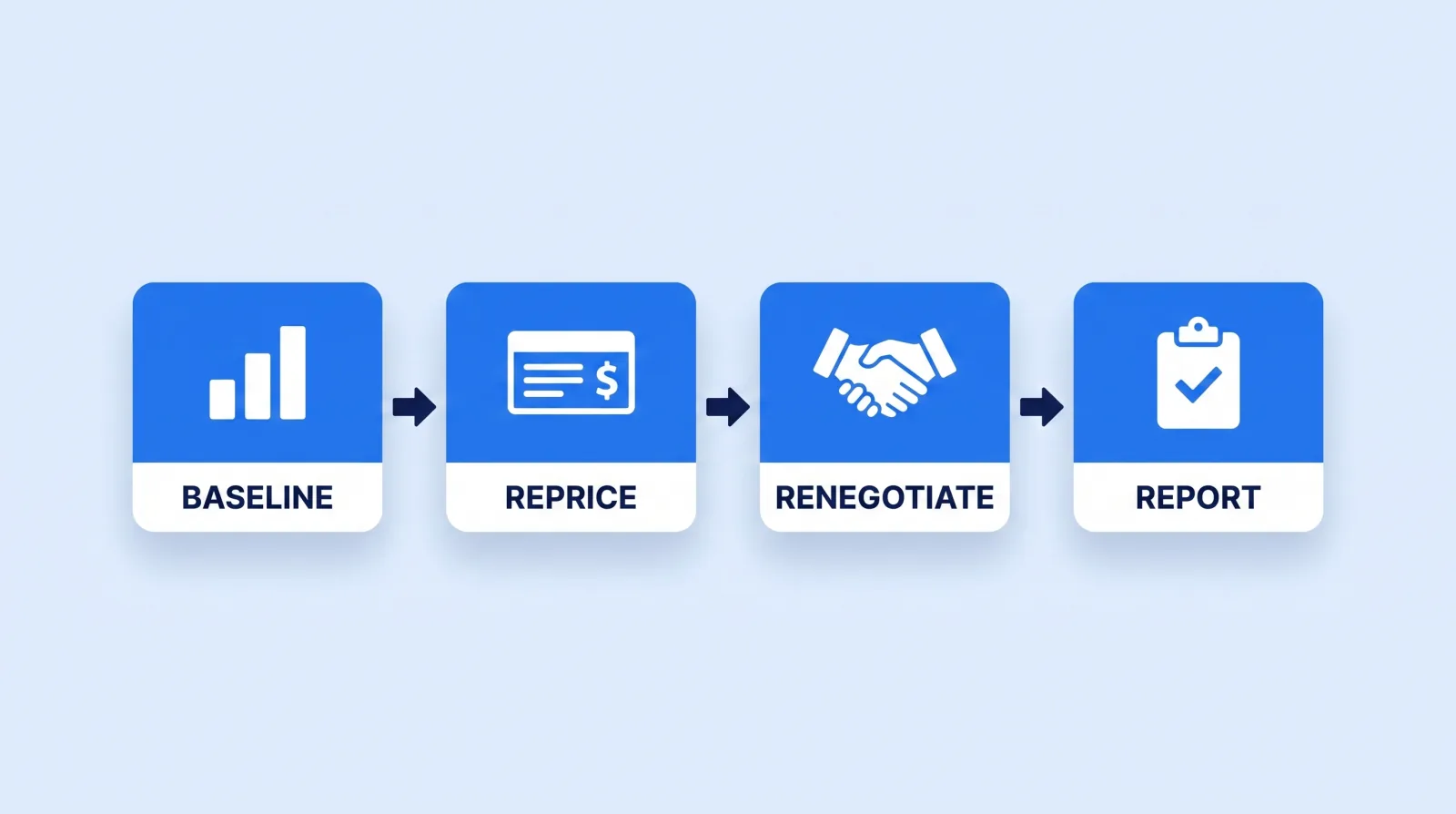
- ✅ Screenshot your baselines before August 24. Trailing 28-day and 90-day CTR, APV, AVD and subs-per-1K. Once the series is mixed, you cannot reconstruct the clean version.
- ✅ Switch your reporting default to engaged views. YouTube Studio → Analytics → Advanced mode. Make it the number your team quotes internally.
- ✅ Annotate August 24 in every dashboard and spreadsheet you maintain. Anyone comparing across that date without a marker will draw a wrong conclusion.
- ✅ Do not compare across the boundary for at least 90 days. Compare August-24-onward to August-24-onward. Year-over-year comparisons are broken until August 2027.
- ✅ Re-check any alert or automation that fires on a view threshold. Those will trip early now.
- ✅ Audit live sponsorship contracts for the word "views" (next section).
- ✅ Tell your clients before they notice. A creator who hears it from you reads a rising graph correctly. One who spots it alone reads it as your win — or, in a bad month, as your failure.
5. Sponsorships: The Line Item Nobody Is Checking
This is the section with actual money attached, and it is getting almost no coverage.
A large share of brand deals are priced on CPM against views — commonly $20–$50 per 1,000 views for a YouTube integration, more for a dedicated video. If a contract says "views" and does not define which metric, the denominator just changed underneath a live agreement.
It cuts both ways, and which way depends on the contract:
- Guaranteed-views deals — you hit the guarantee sooner on paper. Short-term good for you, and a brand that later learns why will not feel good about it.
- CPM-priced deals — you invoice more for the same real audience. Same dynamic, larger reputational bill.
- Performance-bonus tiers — bonuses trigger on inflated counts, which is exactly the kind of thing that gets clawed back.
- Rate cards quoting average views per video — every media kit with a views figure is about to overstate the delivered audience.
Our position, and what we advise clients: specify engaged views in the contract, and say so first. Get ahead of it in writing, before a brand's analyst finds a 20% jump with no matching lift in clicks and starts asking whether the last three invoices were right. Being the creator who flagged it is worth considerably more than the few hundred dollars of accidental upside.
The same discipline applies to the numbers in your own reporting. If your channel unit economics model has a revenue-per-view figure in it, that figure is now measuring a different thing than it did last week.
6. Why YouTube Did This
YouTube has not published a detailed rationale, so treat what follows as reading the board rather than reported fact.
The obvious motive is comparability. Note that none of this touches ranking — the recommendation system runs on watch time and viewer satisfaction signals, not on the public counter, so a looser view definition does not make a video easier to surface. TikTok and Instagram have counted from the first frame for years, which meant an identical clip showed a much smaller number on YouTube — a real problem when a brand is choosing where to spend and comparing platform screenshots side by side. Standardising removes an apples-to-oranges gap that made YouTube look weaker than it was.
The tell is that YouTube kept the strict metric intact and renamed it rather than deleting it. Engaged views still gate the money. That is a platform making its public numbers competitive while refusing to pay out on the looser definition — which is, on balance, the honest version of this change. The alternative would have been to loosen what earns.
The Bottom Line
The public view count got easier to earn and now measures something closer to "impressions with playback." The metric that pays you, and the metric that tells you whether a video worked, both moved to a field called engaged views and neither got easier.
Screenshot your baselines before the 24th, switch your reporting to engaged views, mark the date on every dashboard, and check your sponsorship contracts for an undefined "views." The channels that get hurt here will not be the ones whose numbers changed — they will be the ones that changed a strategy because of it.


