

The Short Answer: Documentary Editing Cost
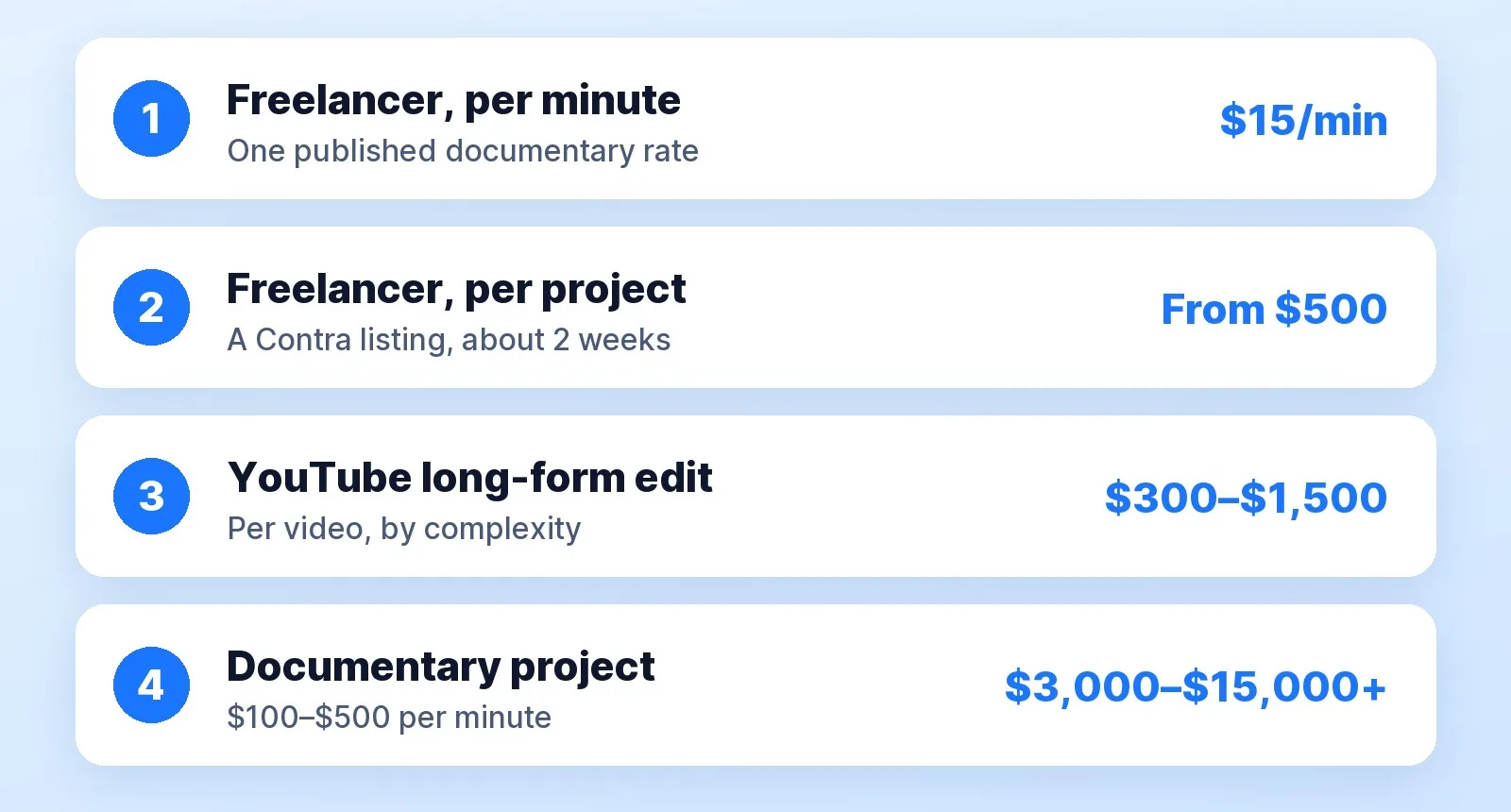
Documentary editing costs about $300–$1,500 per video for a documentary-style YouTube video and $3,000–$15,000+ for a documentary project, according to Vidico's 2026 cost guide, with individual freelancers publishing rates as low as $15 a minute. A full documentary takes much longer than either: the Alliance of Documentary Editors schedules one month of editing per 10 minutes of finished film.
Those are market numbers, not ours: Mark Studios' own prices (monthly plans, or an instant quote for a single video) are on our pricing page, not here. Every figure links to the page that published it, checked October 9, 2026.
The range is wide because "documentary" covers two different jobs. One is cutting a scripted, narrated video to its script. The other is finding the story in hours of interviews. They're priced differently, and knowing which one you're buying is most of the budget.
Documentary Editing Prices in 2026
| Route | Published price | What it covers | Time |
|---|---|---|---|
| Freelancer, per minute (Paiffects) | $15 a minute | Storytelling, pacing, sound design, narrative structure and color grading | Not stated |
| Freelancer, per project (a Contra listing) | Starting at $500 | A documentary edit | About 2 weeks |
| YouTube long-form edit (Vidico) | $300–$1,500 per video | Depends on editing complexity | Not stated |
| Documentary project (Vidico) | $3,000–$15,000+, or $100–$500 a minute | A documentary edit | 2–8 weeks |
| Editor by the hour (Vidico) | $25–$150+ an hour for US freelancers; $100–$250 for agencies | Whatever you scope | Agreed per project |
Those ranges stop well short of a feature. The Bureau of Labor Statistics puts the median annual wage for film and video editors at $75,420 (May 2025), about $6,285 a month. At one month per 10 finished minutes, a 90-minute feature is about nine months of an editor's time: roughly $56,600 at the median wage, before an assistant editor, overhead or profit. A $15,000 quote buys a short film or a heavily scripted one, not a feature found in the edit.
For how editing is priced generally, see our breakdown of what video editing costs, and for channel work specifically, what a YouTube video editor costs.
Scripted or Unscripted: The Split That Sets the Price
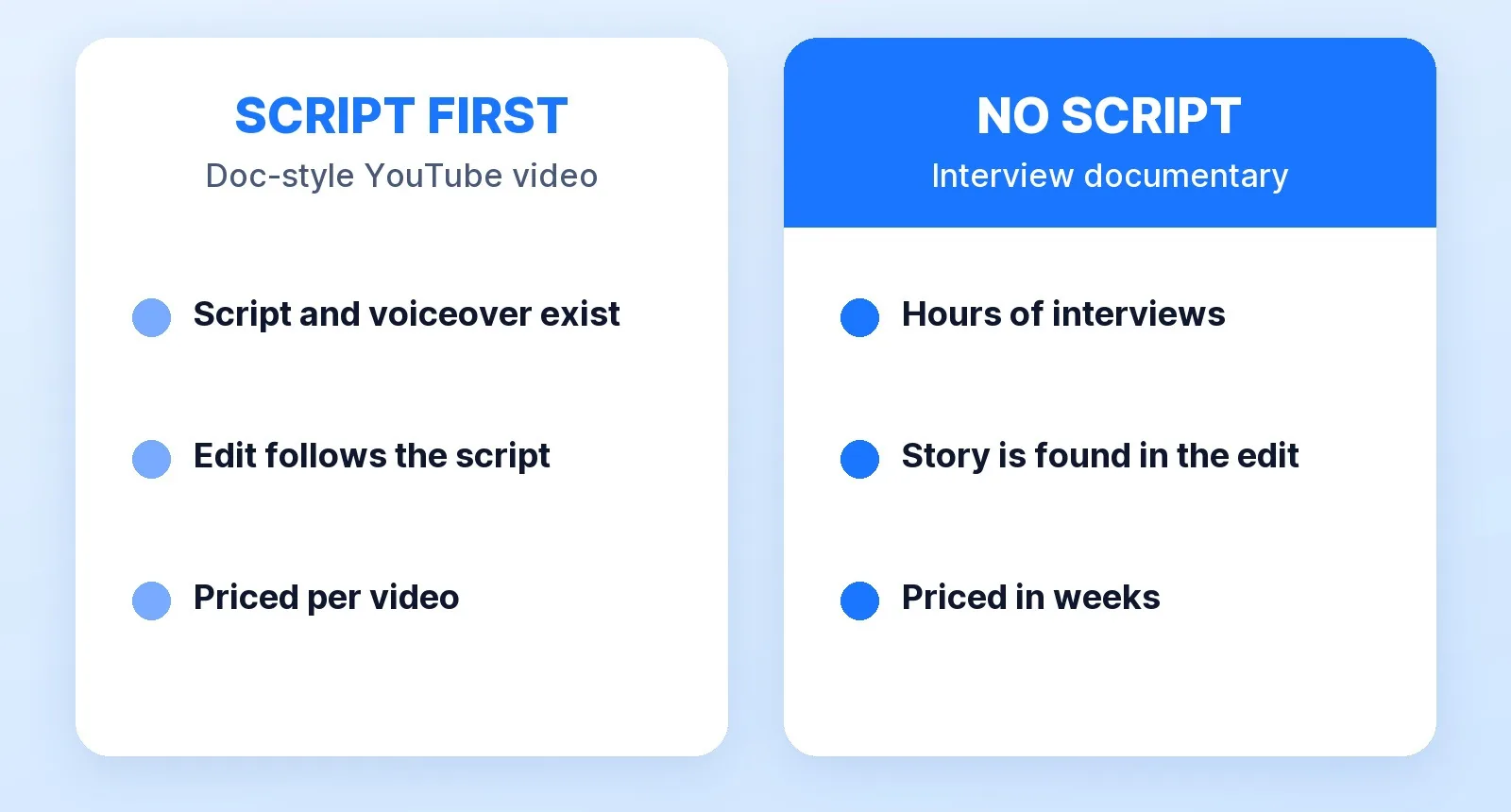
Script first. Most documentary-style YouTube videos start with a written script and a recorded voiceover. The editor's job is to build the visuals under the narration: B-roll, archival clips, maps, timelines, music and sound. It's demanding work, but the story is already decided, so it prices per video.
No script. A traditional documentary starts with interviews and observational footage. As the International Documentary Association puts it in its coverage of the editors' guide, in most documentaries "there is no script," and the story is discovered or written in the edit. The editor is doing part of the writer's job, so the work prices in weeks, not videos.
Many projects sit in between: a brand documentary with a loose outline, or a YouTube video built around one long interview. Tell an editor which end you're closer to before you ask for a quote.
How Long Documentary Editing Takes
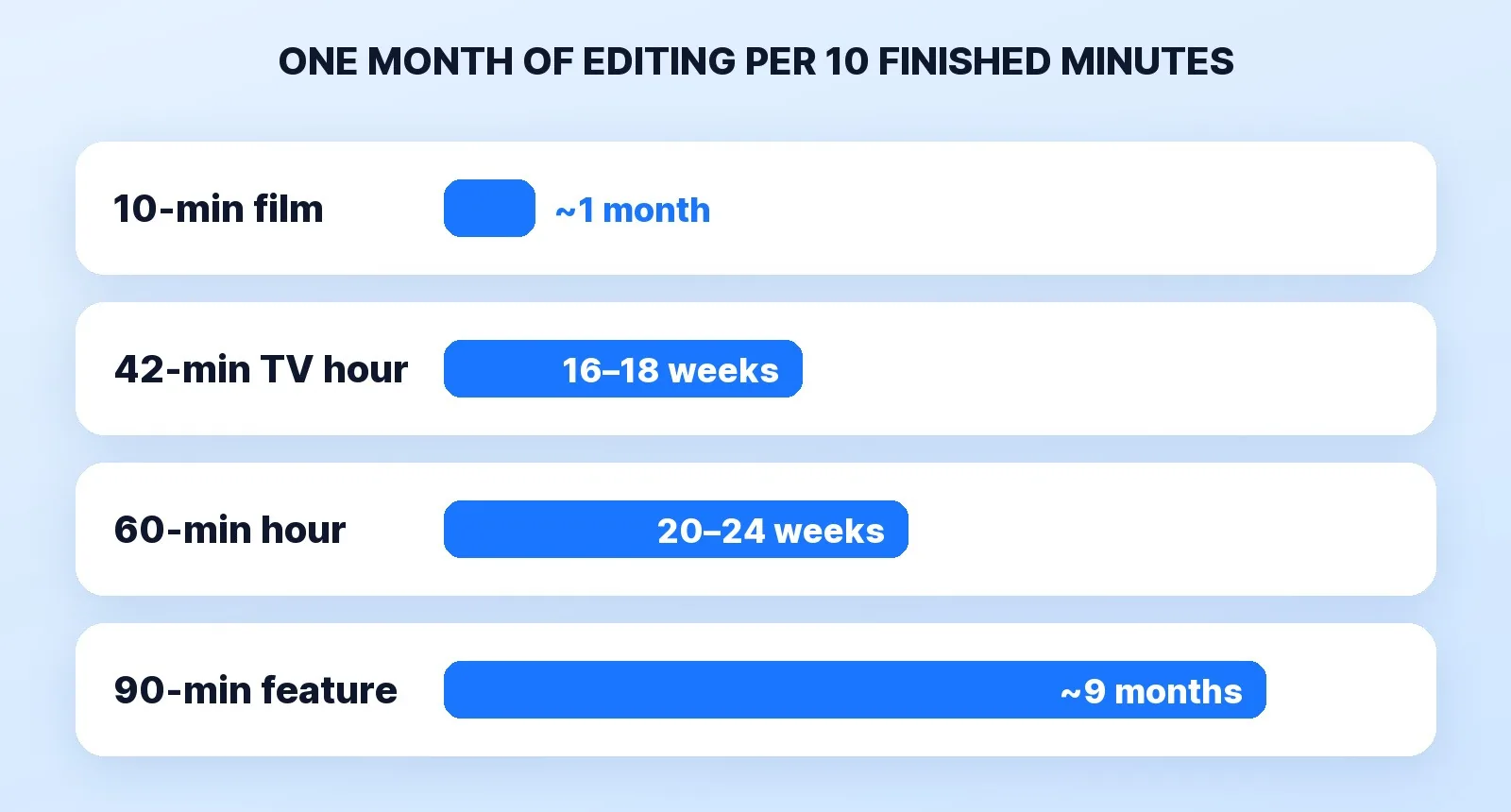
The Alliance of Documentary Editors built its scheduling guide from data from hundreds of professional editors and assistant editors. Its rule of thumb is one month of editing per 10 minutes of finished content, with 16–18 weeks for a 42-minute TV hour and 20–24 weeks for a full 60-minute hour.
Scripted YouTube documentaries move much faster, because the structure arrives with the script. Vidico lists 2–8 weeks for a documentary project, which matches shorter or tightly scripted work. If a quote promises a feature in a few weeks, ask what's being skipped.
What Moves the Price
- Script or no script. The biggest single factor, for the reasons above.
- Hours of footage. Every interview hour has to be watched, transcribed and logged before anyone can choose the best lines.
- Archival footage and music. Licensed clips and tracks cost money on top of the edit. Using material without a license depends on fair use, which the U.S. Copyright Office evaluates on four factors, including how much you use and the effect on the market for the original. Our guides to copyright strikes and fair use and music licensing for YouTube go further.
- Graphics. Maps, timelines and animated archival photos are standard in documentary-style YouTube videos. Each is its own piece of work; see when motion graphics earn their place.
- Finishing. A color grade and a proper sound mix are separate passes. Paiffects' $15 rate includes both, so check whether a quote does.
- Review rounds. Rough cut, fine cut and picture lock are three review points. Budget your own time for each.
What to Send a Documentary Editor
- The script and voiceover, if you have them, or the interview transcripts with your favorite lines marked.
- All footage, organized by interview or shoot day, with the archival clips and their license details.
- The target length and where it will be published.
- One reference film or video, with timestamps on what you want to borrow: pacing, graphics, music.
- The music plan: licensed tracks, a library account, or a budget for the editor to license.
- Who signs off, and when you'll review the rough cut, the fine cut and the lock.
Our editor handoff framework has the full brief structure. If you're weighing a freelancer against a studio, Fiverr vs Upwork vs an agency runs the trade-offs.
Where Mark Studios Fits
Documentary and storytelling edits came up in 45 of 698 first messages from buyers in our inbox, more than podcast edits or real estate videos. We've delivered 10,000+ projects for 4,500+ clients at a 4.9★ average, much of it long-form YouTube. A founder's origin story is a common short documentary, and we edit those through our video editing for founders service. If the interviews still need filming in Palm Beach County, we film them on site across Palm Beach, Broward and Martin counties (on-site videography).
The Bottom Line
Documentary editing costs about $300–$1,500 per video for a scripted, documentary-style YouTube video and $3,000–$15,000+ for a documentary project in 2026. A feature found in the edit runs far past that, because editors schedule about a month per 10 finished minutes. Decide whether you're buying a scripted edit or a story search, then quote accordingly.


