The Owner Account Cannot Hand Itself Over
Buried in YouTube's channel permissions documentation is a line most brands meet at the worst possible moment: the Owner "can't transfer ownership to other users." You can grant five levels of access to other people — Manager, Editor, Editor (Limited), Viewer, Viewer (Limited) — but the owner seat itself is tied to the account that holds it. Invitations to those roles also expire after 30 days, which is how a half-finished handover quietly becomes no handover at all.
That single detail is a decent proxy for the whole discipline. Channel management is not a job title and it is not "posting videos." It is a set of recurring obligations that nobody notices until the person carrying them leaves, goes on holiday, or simply gets busy. Across 10,000+ delivered projects — work behind 200M+ views and over $10M in client revenue — the channels that stall are rarely the ones with weak content. They are the ones where five specific surfaces had no owner and no cadence.
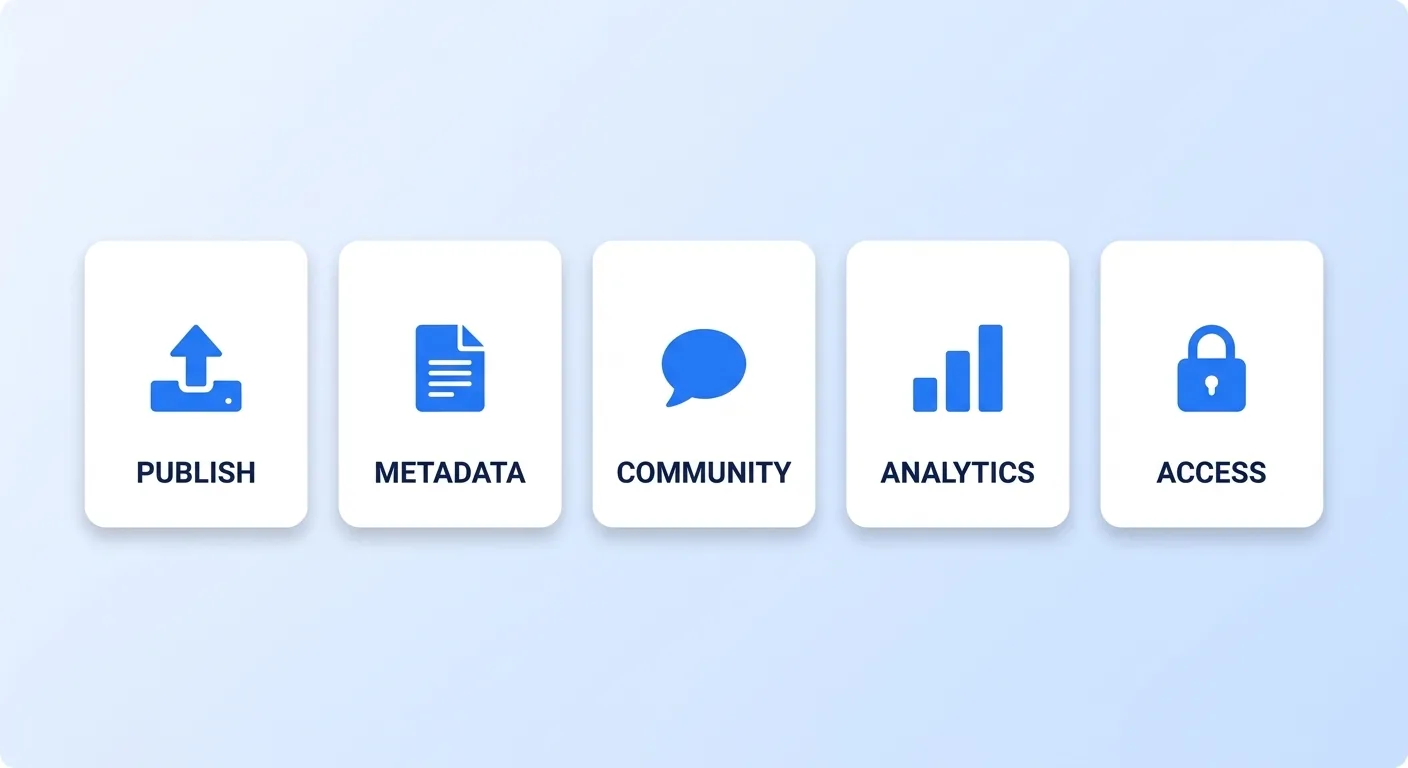
The Five Surfaces
Publishing. Getting the file up: encode, upload, schedule, premiere settings, end screens, playlist placement. The work is boring and entirely checklist-shaped, which is exactly why it drifts when one person improvises it each week.
Metadata. Titles, descriptions, chapters, playlists, and the thumbnail. YouTube's own thumbnail and title guidance treats these as a pair rather than separate fields, and the pairing is a decision someone has to actually make — which is why we run a thumbnail pre-publish checklist rather than leaving it to whoever uploads.
Community. Comments, posts, and moderation. This is the surface that accrues debt fastest, because unanswered comments do not throw an error — they just quietly stop arriving. The comment operations system is the delegable version.
Analytics. Not staring at the dashboard — converting it into a decision on a fixed schedule. A channel that reviews numbers only when something looks wrong is running open-loop, and the metrics worth acting on are a much shorter list than the dashboard offers — Backlinko's ranking-factor work is a reasonable primer, and our own breakdown of the KPIs that actually matter is the shortlist we review against.
Access and governance. Who holds which role, who was offboarded, and what the channel-level settings say. YouTube's audience setting is a good example of a governance item with teeth: the channel-level choice applies to existing and future videos, per-video settings override it, and if you set nothing, every upload has to be classified individually forever.
The Cadence
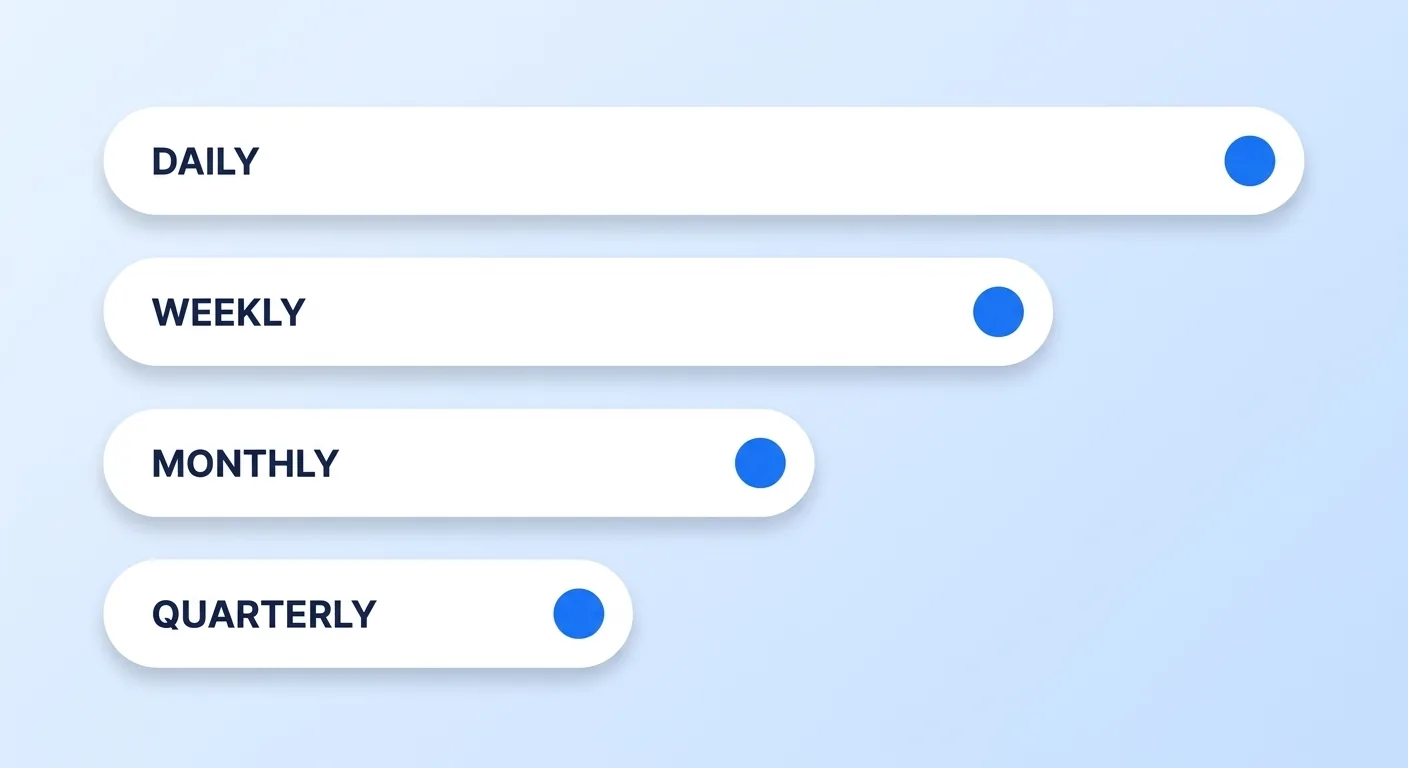
The surfaces are useless without frequencies attached. This is the schedule we run for managed channels, and the honest version of "complete guide" is that most brands are doing the top row and none of the others.
| Cadence | What actually happens | Typical time |
|---|---|---|
| Daily | Triage new comments, answer the first-hour ones on a fresh upload, check nothing is flagged | 20 min |
| Weekly | Publish and schedule, write metadata, place the video in playlists, review last week's retention and CTR | 2–3 hrs |
| Monthly | Playlist and end-screen audit, refresh underperforming titles and thumbnails, review the content calendar against reality | 2 hrs |
| Quarterly | Permissions review and offboarding, channel-settings audit, brand-asset refresh, strategy reset | 3 hrs |
The quarterly row is the one everyone skips, and it is the one that prevents the two most expensive failures below.
Three Failure Modes That Only Appear at Scale
1. The single point of access. One person holds the Owner account. They leave, change email, or lose the recovery method — and because ownership cannot be transferred to another user, you are now negotiating with account recovery rather than running a channel. The fix is boring: grant Manager roles to at least two people using channel-level permissions, document who holds what, and re-send invites approaching the 30-day expiry. Which role to give an editor, and how to remove it cleanly when they move on, is covered in channel access and permissions — note that an Editor can publish but cannot delete published content, which is usually the level you actually want.
2. Metadata drift. With one person uploading, description templates, playlist rules and naming conventions live in their head. With three, they diverge within a month. You notice when a playlist stops making sense or half the back catalogue has no chapters. Write the conventions down before you add the second uploader, not after.
3. Community debt. Comments unanswered for a week teach your audience that nobody is home. It does not show up in any dashboard; it shows up as a slow decline in the very engagement you were hoping to measure.
What to Keep and What to Hand Over
Not all five surfaces should leave the building. The split we see work:
- Keep in-house: the editorial decision about what to make, the voice in replies to your most engaged viewers, and the Owner seat.
- Hand over: publishing mechanics, metadata production, thumbnail design, first-pass comment triage, and the reporting layer.
The rule of thumb is that anything with a right answer and a checklist should leave; anything requiring your judgement about the audience should not. That is also why the handover fails when it is framed as "manage my channel" rather than as named surfaces with a cadence — an unnamed obligation is an unowned one.
If you are weighing this against hiring someone internally, the in-house cost comparison breaks down what a salaried seat actually costs once tools and downtime are included, and our channel management service exists because most growing brands need four of these five surfaces run reliably rather than a full-time hire. For company channels specifically, where the founder is the on-camera talent and the bottleneck, we break the model out separately for founders.
The Bottom Line
Channel management is five surfaces — publishing, metadata, community, analytics, access — each with an owner and a frequency. Write the cadence down, grant a second Manager today, and put a quarterly permissions review in the calendar. The channels that break are almost never the ones that ran out of ideas; they are the ones where nobody owned the boring parts.